


How AI Has Already Changed Video Production for Healthcare, Mental Health and Beyond
What really surprises me is how all the articles and videos I see across for example social media talk about AI in the future tense. About what ‘will’ happen, what the implications will be. When it’s already here. I think the speed and cadence of change has somehow created a vortex where all the news is placed in some soon-to-be- arrived at future when it’s actually here. And it’s been here for a while.
For example in storyboarding. In 2023 we were still using storyboards developed by hand. By 2024 these were being generated through software. In 2026 the ability to produce storyboards has of course improved but the ‘leap’ if you like had already happened nearly two years before. The most recent developments are just building on the initial development. There are mutiple examples of this opver the past three years but its not just the software.
Pre Covid, the ability to collaborate on projects with the client relied largely on face to face meetings. POst Covid we all moved to Teams and Zoom. This meant a revolution in creative development and workflows as clients collaborated on the creative journey with us.
The reality is more direct. AI is no longer arriving. It has already reshaped the landscape. What has not caught up is how organisations structure work around it. Commissioning models lag behind. Ideas of expertise remain outdated. Responsibility is still too fragmented between clients, agencies and production teams.
This article explores that shift. More importantly, it explains why the most effective AI animation work now happens when strategy and production sit closer together, not further apart.
The Shift From Production Scale to Decision Quality
For much of my career, scale defined production quality. Larger teams implied better outcomes. Bigger agencies promised certainty. Complexity demanded infrastructure.
That logic made sense when animation was slow, expensive and unforgiving. One wrong decision could lock a project into weeks of work and enormous cost. AI has changed that equation entirely.
Iteration is now cheap. Speed has increased. As a result, decision quality matters more than process volume. When tools move fast, judgement becomes the differentiator. Experience outweighs headcount.
This is why the centre of gravity is shifting away from permanent production structures and toward smaller, expert-led configurations built around specific problems. Agencies are not failing. The constraints that once justified them are simply loosening.
Why Consultancy Alone No Longer Works
There is a growing temptation among senior practitioners to retreat into pure consultancy. Advise from a distance. Let others handle execution.
That separation worked in the past. Today, it breaks down quickly.
AI does not reward abstract frameworks. It rewards applied judgement. Capabilities evolve too fast for theoretical guidance to hold on its own. What matters is not whether an idea sounds right, but whether it produces something accurate, coherent and usable in the real world.
This is why I work as both consultant and producer. I help organisations decide what to make, why it matters and how it should function psychologically and strategically. I then carry those decisions into production and deliver the work.
Not as a large agency. Not as a solo generalist. Instead, I act as a lead producer who assembles the right specialists for each commission and remains accountable for the outcome.
Where This Model Works Best
Although AI video and animation can be applied widely, there are five contexts where this integrated consultant-producer approach consistently delivers better results.
Healthcare Organisations
Healthcare communication is not branding. It is an exercise in trust, clarity and emotional containment. Patients are often anxious, overwhelmed or cognitively overloaded. The cost of misunderstanding is high.
AI allows faster iteration and wider reach. However, speed only helps when guided by psychological understanding. I work with healthcare organisations to design and produce animations that explain conditions, pathways and treatments clearly without oversimplification or spectacle.
Consultancy shapes the tone and structure. Production delivers the clarity.
Pharma and Biotech
Pharma and biotech sit in constant tension between accessibility and accuracy. Mechanisms of action, clinical data and regulatory constraints place real limits on how stories can be told.
AI lowers the cost of visualising complex systems. At the same time, it increases the risk of distortion if left unchecked. In this space, I work directly with teams to define what can and cannot be shown. From there, I produce animations that remain faithful to the science while still communicating meaningfully.
Consultancy alone is insufficient. Production without judgement is dangerous.
Mental Health and Wellbeing Organisations
Mental health communication often fails due to emotional misjudgement rather than factual error. Language alienates. Imagery overwhelms. Good intentions backfire.
Animation, when done well, allows people to recognise their experience before they can articulate it. AI now makes this approach faster and more accessible, particularly for charities and public-facing organisations with limited budgets.
In these projects, I work end to end. Psychological framing and production remain tightly linked so nothing essential is lost in translation.
Digital Health Apps and Health Tech
Health tech companies operate in a harsh environment. Attention is scarce. Competition is intense. Users disengage quickly when value is unclear.
AI video enables onboarding, feature explanation and education at speed. Without coherence, however, speed simply accelerates confusion. My role here is to help teams decide what genuinely needs explaining, then produce videos that do that job efficiently.
Not everything needs a video. The right video, done properly, often pays for itself rapidly.
Agencies and In-House Teams
Increasingly, agencies and in-house studios involve me not as a competitor, but as an external expert. I help them think through AI workflows, content strategy and production decisions. When needed, I step in to produce specific pieces of work.
This allows teams to stay lean while still delivering high-quality output. Flexibility replaces permanent overhead.
Why This Way of Working Improves Outcomes and Quality of Life
There is also a personal reason I work this way. Traditional agency culture often mistakes activity for progress. Meetings multiply. Firefighting becomes normal. Momentum disappears beneath motion.
This consultant-producer model is quieter. More deliberate. I work on fewer projects with greater focus. Decisions are made quickly when they matter. Execution is delegated intelligently. Overhead stays low.
Judgement matters more than busyness. Clients increasingly respond to that.
AI Does Not Replace Experience. It Exposes the Need for It
AI does not remove the need for expertise. It removes the hiding places. When tools are powerful and accessible, what differentiates work is taste, restraint and responsibility.
The future of animation and video is not fully automated. Nor is it dominated by massive agencies. It is shaped by individuals who understand both the technology and the human context in which it operates.
People who can advise, decide and deliver.
That is the role I now occupy. And it is not the future. It is already here.
by Quint Boa, AI Video Executive & Producer
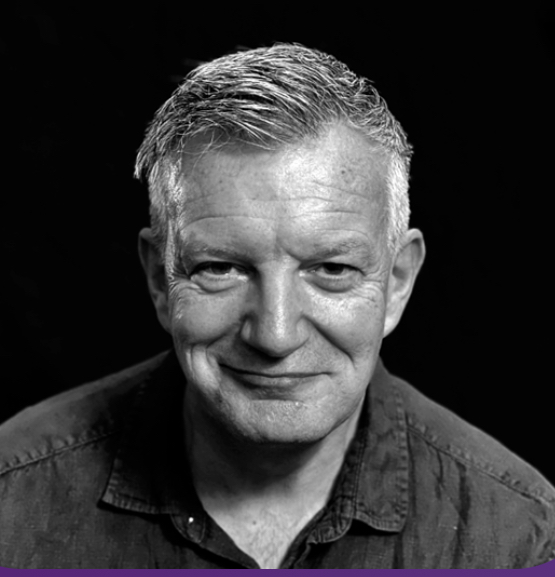
Quint is an Executive Producer specialising in AI video production for the healthcare sector. Quint has worked for over 40 years in the film, radio, and television industries. Twenty-five years ago, he founded Synima, a global video production company. Quint has embraced artificial intelligence in the creative process. Working with trusted colleagues, he’s developed a hybrid approach to AI within video production that expedites workflows and reduces costs. Quint believes ‘your health is your wealth’ and is enthiastic about every aspect of healthcare. As a UKCP-qualified psychologist, Quint feels uniquely equipped to support the communication challenges the healthcare faces by combining his experience with AI video production techniques, psychological insight and practical solutions.