

How When Health Information Sounds Certain: ADHD, AI and the Case for Expert-Led Patient Education
As a UKCP-qualified psychotherapist with more than 30 years of clinical experience, I have become increasingly interested in not simply what we tell people about their mental health, but how we tell them.
This matters most when somebody is distressed.
A person experiencing trauma, depression, anxiety or emotional overwhelm is not necessarily in the best position to absorb pages of written information. They may be frightened, exhausted or quite literally lost for words. In those moments, a technically accurate leaflet can still fail because the person cannot make meaningful use of it.
This is one reason I have become such a strong advocate for expert-led animation in mental health and patient education.
In my own clinical work, I have seen people visibly settle when an animation gives shape to something they have been struggling to understand. A good piece of animation can provide a map. It can externalise an experience, explain what may be happening and give the patient, their family and their clinician a common language to work with.
Research increasingly supports the wider principle. Systematic reviews have found that animated and video-based health education can improve patient knowledge and short-term recall, with particular potential when complex information needs to be made accessible.
The arrival of generative AI makes producing this kind of material faster and potentially far more accessible.
It also makes expert oversight more important than ever.
The problem with confident health information
We are moving into an age in which information no longer arrives looking tentative.
Ask a search engine or an AI system a health question and the response can arrive within seconds, beautifully structured and expressed with apparent confidence.
That fluency is seductive.
Earlier this year, Google removed or altered some AI-generated health summaries after reporting identified misleading information involving blood tests and other medical queries. Other investigations have found examples where AI-generated health information contradicted established clinical advice.
The important issue is not that artificial intelligence is uniquely unreliable. Humans get things wrong too.
The difficulty is that AI can remove the visible signs of uncertainty.
A hesitant clinician says, “There are several possibilities.”
A well-designed AI answer may simply produce the most probable explanation in beautifully finished prose.
The reader is then left with something that looks less like information and more like a conclusion.
Healthcare rarely works like that.
Channel 4 and The Great ADHD Myth?
A particularly interesting example appeared on television this week.
Channel 4 broadcast The Great ADHD Myth?, presented by NHS psychiatrist Dr Max Pemberton. Its stated premise was to investigate whether ADHD is genuinely a neurodevelopmental disorder or instead a social construct produced partly by modern life, education, screens, diet and our tendency to medicalise behaviour.
There is an important discussion buried inside that proposition.
ADHD assessment should be rigorous.
We should ask questions about prescribing.
We should be concerned when commercial incentives encourage rushed assessments.
We should be able to discuss the effects of education, sleep, exercise, diet, screens, family life and environment without being accused of denying somebody’s experience.
I have no difficulty with any of that.
What troubled me was the leap from questioning how ADHD is diagnosed and treated to questioning whether ADHD meaningfully exists as a neurodevelopmental condition at all.
One contributor, former Royal College of General Practitioners president Dr Iona Heath, told the programme that she did not regard ADHD as a medical condition. Presenter Max Pemberton ultimately described himself as convinced that it was a myth to regard ADHD as a neurodevelopmental disorder, instead describing it as difficult behaviours and a social construct.
That is a very different claim.
Scrutiny is not the same as invalidation
The scientific picture of ADHD is more complicated than either side of this debate sometimes admits.
There is no single “ADHD gene”, nor is there a brain scan that can simply be shown to a patient and used to diagnose ADHD.
That does not mean there is no biological evidence.
ADHD is one of the most strongly heritable psychiatric and neurodevelopmental conditions studied. Large genetic reviews have estimated heritability at around 70 to 80 percent, while newer genetic work continues to identify both common and rare variants associated with ADHD risk.
That does not mean environment is irrelevant. Far from it.
Genetics, development, psychology and environment interact. A rigid school may make life substantially harder for a child with ADHD. Constant digital stimulation may influence attention. Sleep, food, exercise and family stability can affect behaviour.
But showing that environment influences symptoms is not the same as demonstrating that the underlying condition is imaginary.
The NHS England independent ADHD Taskforce reached almost the opposite conclusion to the impression created by the programme. Its review found consistent evidence that ADHD in England remains under-recognised, under-diagnosed and under-treated, while also acknowledging legitimate concerns around over-medicalisation and the quality of some assessments.
That seems to me a much more useful place to begin.
Two things can be true simultaneously.
Some people may receive poor or inappropriate ADHD assessments.
And many people with genuine ADHD remain undiagnosed and unsupported.
Medication deserves a better conversation too
The same distinction matters when talking about medication.
Medication is not appropriate for everybody. Side effects matter. Prescribing to children deserves particular care, and medication should never become a substitute for thinking about the child’s home, school and wider environment.
Yet describing ADHD medication in sensational terms risks replacing one oversimplification with another.
There is a substantial clinical evidence base for pharmacological treatment. A major network meta-analysis examined 133 double-blind randomised trials involving more than 10,000 children and adolescents and more than 8,000 adults in its efficacy analysis, finding evidence that several ADHD medications reduce core symptoms in the short term compared with placebo. The same research also documented tolerability and side-effect concerns, which is precisely why treatment needs clinical supervision rather than ideology.
The child at the centre of the Channel 4 documentary illustrates the problem rather well.
He stopped medication while his family introduced exercise, outdoor activity, dietary changes and reduced screen use. Some aspects of his life appeared to improve. Yet his school performance deteriorated sufficiently that his mother ultimately restarted the medication.
To me, that does not prove medication is the answer.
Nor does it prove lifestyle intervention failed.
It demonstrates something less exciting but far more clinically recognisable: human beings are complicated.
Why the framing matters
This is where the ADHD documentary connects directly with the way we communicate health information.
The person watching at home does not necessarily retain all of the caveats.
They remember the central story.
“Perhaps ADHD isn’t real.”
That message lands very differently on somebody who has waited years for an assessment, on a parent trying to understand a struggling child, or on an adult whose diagnosis has finally given some coherence to decades of difficulty.
ADHD UK warned before transmission that framing the condition as a “myth” risked increasing stigma and discouraging people from seeking assessment. Following the broadcast, the organisation reiterated that ADHD should not be reduced to a social construct and challenged the programme’s balance.
Recent UCL research gives some indication of why dismissiveness matters. A large UK study found substantially reduced life expectancy among adults with diagnosed ADHD compared with matched controls, although the researchers stressed that this is likely connected to modifiable risks, unmet healthcare needs and lack of support rather than ADHD itself inevitably shortening life.
These are not trivial questions of terminology.
How we explain a condition can influence whether somebody seeks help, accepts help or concludes that their difficulties are simply a personal failure.
Patient education is not the same as giving somebody an answer
This distinction is increasingly important in the age of AI.
Patient education is sometimes treated as information delivery. Give somebody enough facts and we assume they will understand.
Clinical experience tells us otherwise.
Understanding requires context.
It requires explanation.
It sometimes requires repetition.
And it requires room for uncertainty.
Good patient education should help somebody understand what may be happening without pretending that a general explanation can diagnose the individual sitting in front of the screen.
It should help people recognise when professional care matters.
It should also be capable of saying, “We do not know yet.”
That sentence is surprisingly important.
Where expert-led AI animation fits
This is where I believe AI has an extremely valuable role.
Not as the expert.
As the tool.
Artificial intelligence can now help production teams create visual material at a speed and scale that would have been impractical only a few years ago. It can support storyboarding, visualisation, animation, localisation, versioning and the creation of material for different audiences.
That offers enormous potential for healthcare organisations.
A child can receive one explanation.
A parent can receive another.
A patient with limited health literacy can be shown a visual explanation rather than given several pages of clinical language.
The underlying information can remain consistent while the communication adapts to the audience.
But somebody still has to take responsibility for what that information means.
What expert-led AI animation should look like
For me, the important principles are relatively straightforward:
- Scripts should be grounded in accepted evidence and reviewed by appropriate subject specialists.
- The difference between established evidence, clinical opinion and emerging research should remain visible.
- Animation should clarify complexity rather than remove inconvenient nuance.
- Patients should be directed towards professional support when individual assessment is required.
- Tone, accessibility and emotional impact should be considered alongside factual accuracy.
- AI should accelerate production, not determine the clinical message.
That last distinction matters enormously.
AI can produce the communication. It should not decide the medicine.
A lesson from the ADHD debate
There is a worthwhile debate to be had about ADHD.
I would like us to have it.
We should talk about the quality of diagnosis, the long waiting lists, the commercialisation of assessment, medication, schools, family environments and whether modern life is creating conditions in which attentional difficulties become harder to manage.
Those are important questions.
But we should be very careful about turning legitimate scrutiny into a claim that the condition itself is somehow invented.
The absence of a simple biomarker is not evidence of absence.
Likewise, the fact that environmental changes can help somebody does not mean their underlying difficulty was never real.
Psychotherapy teaches you fairly quickly that the most useful explanations of human behaviour are rarely the simplest ones.
Why this matters now
The challenge facing healthcare communication is therefore bigger than misinformation.
It is premature certainty.
A television documentary can do it.
A newspaper headline can do it.
An AI-generated search result can do it.
And poorly conceived patient education can do it too.
All can take a complicated subject, remove enough uncertainty to make it compelling, and leave the audience with something memorable but incomplete.
AI animation gives us the opportunity to do something better.
We can create healthcare information that is visual, accessible, engaging and affordable enough to reach people when they actually need it.
But its value depends on who is directing it.
The future of patient education should not involve choosing between human expertise and artificial intelligence.
It should involve using AI to make human expertise easier to understand.
Final reflection
For somebody frightened, overwhelmed or newly diagnosed, information is never just information.
It becomes part of the story they tell themselves about what is happening to them.
That places a responsibility on anyone creating healthcare communication.
Our job is not simply to sound authoritative.
It is to help people understand.
And sometimes the most responsible message we can give them is not a confident answer, but a clearer way of thinking about the question.
by Quint Boa, AI Video Executive & Producer
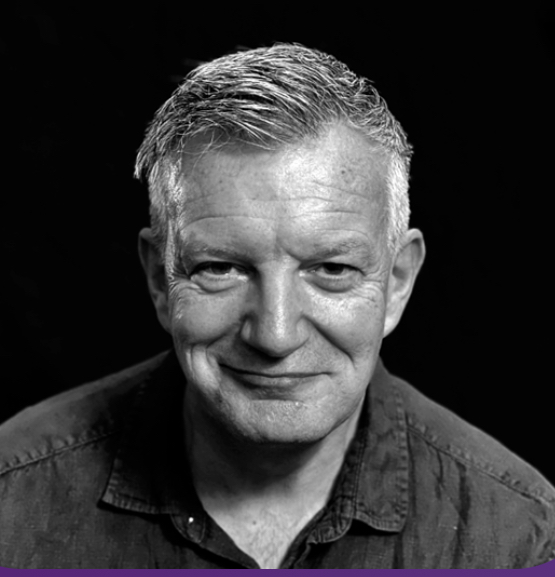
Quint is an Executive Producer specialising in AI video production for the healthcare sector. Quint has worked for over 40 years in the film, radio, and television industries. Twenty-five years ago, he founded Synima, a global video production company. Quint has embraced artificial intelligence in the creative process. Working with trusted colleagues, he’s developed a hybrid approach to AI within video production that expedites workflows and reduces costs. Quint believes ‘your health is your wealth’ and is enthiastic about every aspect of healthcare. As a UKCP-qualified psychologist, Quint feels uniquely equipped to support the communication challenges the healthcare faces by combining his experience with AI video production techniques, psychological insight and practical solutions.