

Have Mobile Phones Become 'Transitional Objects'?
Last week I asked an AI system to summarise a book I’d read several years ago and remembered only dimly. Within a few seconds it produced a concise account of the main argument, outlined the principal criticisms and suggested several authors whose work overlapped with the book’s central themes. The result was impressive, useful and, if I’m honest, faintly unsettling. The unsettling part took longer to identify. Eventually, I realised it stemmed from a question that rarely seems to arise in discussions about artificial intelligence.
We spend an extraordinary amount of time talking about what these systems will soon be capable of doing, yet remarkably little time discussing what all those capabilities are actually for, in a ‘Wait But Why’ Tim Urban style.
The promises are familiar by now. Artificial intelligence will accelerate medical research, increase economic growth, personalise education, transform scientific discovery and help address climate change. Phew. Depending on whom you ask, it may also eliminate vast amounts of drudgery, unlock unprecedented productivity (relative productivity, but if everyone has the same tools?) and usher humanity into an age of unalloyed abundance. Whoopdedoo.
The evangelic tone varies from cautious optimism to something approaching evangelism, but the underlying message remains broadly consistent. AI will solve problems that have resisted solution for decades, perhaps centuries.
Well maybe. But when you gather together all the promises of AI, the future they describe begins to feel strangely indistinct. We are promised longer lives, greater prosperity, better healthcare, more efficient systems and faster scientific progress. All of these developments sound desirable. Yet after a while don’t you begin to wonder what they are ultimately in service of. What, exactly do we, as a species, get from all this?
The obvious answer is that human life improves. Yet that response feels incomplete because it leaves unanswered a more fundamental question: what does an improved human life actually consist of?
Listening to many contemporary discussions about AI, one gets the impression that the answer involves a gradual transfer of responsibility from human beings to increasingly capable systems. Tasks that once required effort become effortless. Activities that demanded expertise become automated. Decisions that involved a spot of uncertainty become optimised. More and more of the things that occupy our days are handled elsewhere, ‘cognitively offset’ as the neurologists say.
There is nothing inherently wrong with this. Few people would willingly return to a world without antibiotics, electricity or indoor plumbing. Technological progress has always involved freeing people from unnecessary labour.
The difficulty is that the boundary between labour and meaning may not be as clear as we imagine. Many of the experiences people value most require effort of one kind or another. Becoming skilled, building a business, sustaining a relationship, recovering from adversity or raising a family all involve uncertainty, patience and the possibility of failure. It would be odd to conclude that these experiences would become more meaningful if those elements were removed. Much of their significance derives from the fact that they demand something of us.
The effort is not merely an obstacle standing between ourselves and fulfilment. More often than not, it is part of fulfilment itself. This is the aspect of the AI conversation that strikes me as most neglected. The assumption seems to be that because technology can reduce effort, reducing effort must therefore be desirable. Yet if that principle were applied consistently, it would become difficult to explain why anyone chooses to learn a musical instrument (murder a song on my guitar in this author’s case), write a novel, climb a mountain or spend years mastering a profession. The challenge is not incidental to these activities. The challenge is part of what gives them value.
The historian Lewis Mumford once suggested that human history could be understood through successive generations of machines. First came machines that could walk, amplifying human muscle. Then came machines that could think, amplifying human intellect. The next frontier, he speculated, might be machines capable of sustaining themselves, acquiring resources and operating with minimal human intervention.
It is an elegant way of describing technological development. Yet every time I encounter the idea, I find myself thinking about the other side of the equation. If machines increasingly walk for us, think for us and eventually manage themselves, what becomes of the human project? What becomes of our neuroplasticity?
The usual answer is that human beings will be liberated to pursue higher goals. Yet the phrase “higher goals” often functions as a placeholder rather than an explanation. Higher goals, such as what exactly? The language surrounding AI is full of references to abundance, optimisation and efficiency. It speaks less frequently about meaning, purpose and character. Those concepts are more difficult to quantify, which may explain why they receive less attention. Yet they seem far closer to the centre of human life than productivity statistics or GDP projections. It’s the ideas of the Enlightenment writ large, but completely missing the point of what actually makes us, makes us feel, human.
Meanwhile, there are reasons to think that caution remains warranted. One concern involves the alignment problem: the challenge of ensuring that increasingly capable systems continue to pursue objectives compatible with human well-being. For example, a data centre needs water, so do we. Who gets the water, us or a fleet of Optimus robots? Another concerns governance. Anthropic CEO Dario Amodei recently invoked ‘Treebeard’, Tolkien’s ancient Ent, as a metaphor for legislation. The comparison is memorable because it captures something instantly recognisable about the mismatch between technological and political timescales. AI systems evolve at a remarkable speed, while democratic institutions tend to move more slowly than my (poorly housetrained) guppy. By the time regulators have fully understood one generation of technology, the next will already have arrived.
Then there is the problem that accompanies almost every powerful technology ever invented. Tools capable of producing immense benefits are usually capable of producing immense harm as well. Every system capable of generating educational content can also generate misinformation. Every tool capable of accelerating scientific research can be used to support fraud, cybercrime or manipulation. I’ve just finished an AI job bringing a dead celebrity back to life as an avatar for an AGM. When the software I use at my company Synima becomes consumer accessible (in about 20 minutes) to create Deepfakes, who is anyone hoping to trust? The issue is not that technology changes human nature. The issue is that it amplifies whatever aspects of human nature happen to be operating at the time.
In this respect, the concerns surrounding AI feel remarkably ancient. Long before computers existed, human beings were telling stories about the acquisition of power. Prometheus steals fire from the gods. Icarus flies too close to the sun. Faust exchanges his soul for knowledge. The builders of Babel reach beyond their limits. Although these myths differ enormously in detail, they share a common intuition. Human beings repeatedly acquire capabilities before they acquire the wisdom necessary to use them well.
Perhaps that is why there was something oddly symbolic about Anthropic naming one of its advanced systems Mythos. Whether intentional or not, the name evokes humanity’s oldest attempts to grapple with power, ambition and unintended consequences. Those same themes now sit at the centre of a technological revolution whose long-term implications remain profoundly uncertain.
What makes the situation particularly unusual is that many of the people building these technologies openly acknowledge the risks. As Jamie Bartlett (2026) has pointed out, the famous P(Doom) estimates discussed within the industry often hover around twenty percent. It is worth pausing over that figure because familiarity has rendered it strangely unremarkable. In almost any other domain, a one-in-five probability of catastrophe would dominate the discussion. Within AI, it frequently appears as a curious aside, alarming enough to attract attention but apparently insufficient to alter behaviour.
Part of the reason may be that the incentives pushing development forward are extraordinarily powerful. Technology companies compete with one another, nations compete with rival nations and investors compete with competitors. Even people who express concern about the pace of development often argue that slowing down is unrealistic because someone else will continue regardless. The result is a race whose participants sometimes appear uncertain about the destination but entirely convinced they must reach it first.
Yet the question that interests me most remains the simplest one. Suppose the optimists are right?
Suppose diseases are cured more rapidly, education improves dramatically, and abundance becomes widespread. Suppose intelligent systems remove countless forms of friction from everyday life. Suppose every promise currently being made by the industry turns out to be broadly true.
What kind of existence are we imagining on the other side? The answer matters because human beings do not live by efficiency alone. We construct identities through the activities we undertake, the challenges we face and the commitments we choose to honour. That’s what our mirror neurons are for after all. (Anna Lembke, 2014) Already, algorithms influence much of what we watch, read and pay attention to. Future systems may not merely recommend content but generate it specifically for us, shaping environments tailored to our preferences with extraordinary precision.
The danger is unlikely to arrive in the form of oppression. It may arrive in the form of convenience, and the ideas E.M. Forster explored in his short story ‘When The Machine Stops’ in 1909. FFS!
What concerns me, therefore, is not the possibility that AI will fail. On the contrary, many of its promised benefits are likely to materialise. The deeper concern is that we may be quietly accepting a vision of human flourishing that mistakes the elimination of difficulty for the achievement of meaning. If that happens, we risk discovering that the aspects of life we were most eager to optimise away were also the aspects that gave life much of its richness.
For most of history, human beings have struggled against limitation, uncertainty and imperfection. We understandably dream of overcoming those conditions. Yet it is worth considering the possibility that some of the things we regard as burdens are inseparable from the experiences we value most. The central question posed by AI may therefore have less to do with technology than with ourselves. It is not whether machines can become more capable. It is whether we still understand which parts of being human are worth preserving once they do.
by Quint Boa, AI Video Executive & Producer
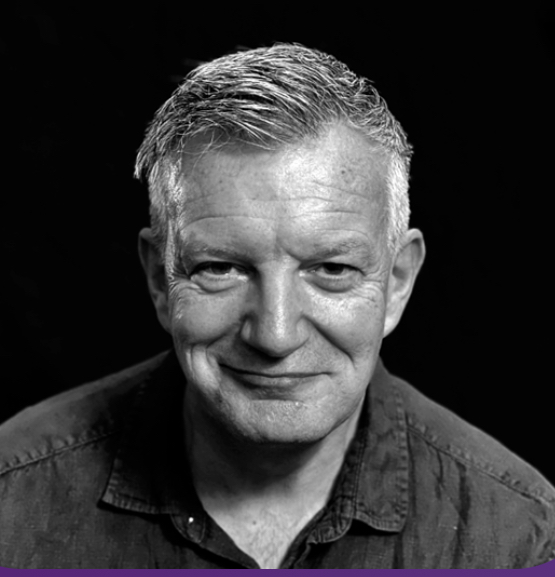
Quint is an Executive Producer specialising in AI video production for the healthcare sector. Quint has worked for over 40 years in the film, radio, and television industries. Twenty-five years ago, he founded Synima, a global video production company. Quint has embraced artificial intelligence in the creative process. Working with trusted colleagues, he’s developed a hybrid approach to AI within video production that expedites workflows and reduces costs. Quint believes ‘your health is your wealth’ and is enthiastic about every aspect of healthcare. As a UKCP-qualified psychologist, Quint feels uniquely equipped to support the communication challenges the healthcare faces by combining his experience with AI video production techniques, psychological insight and practical solutions.