
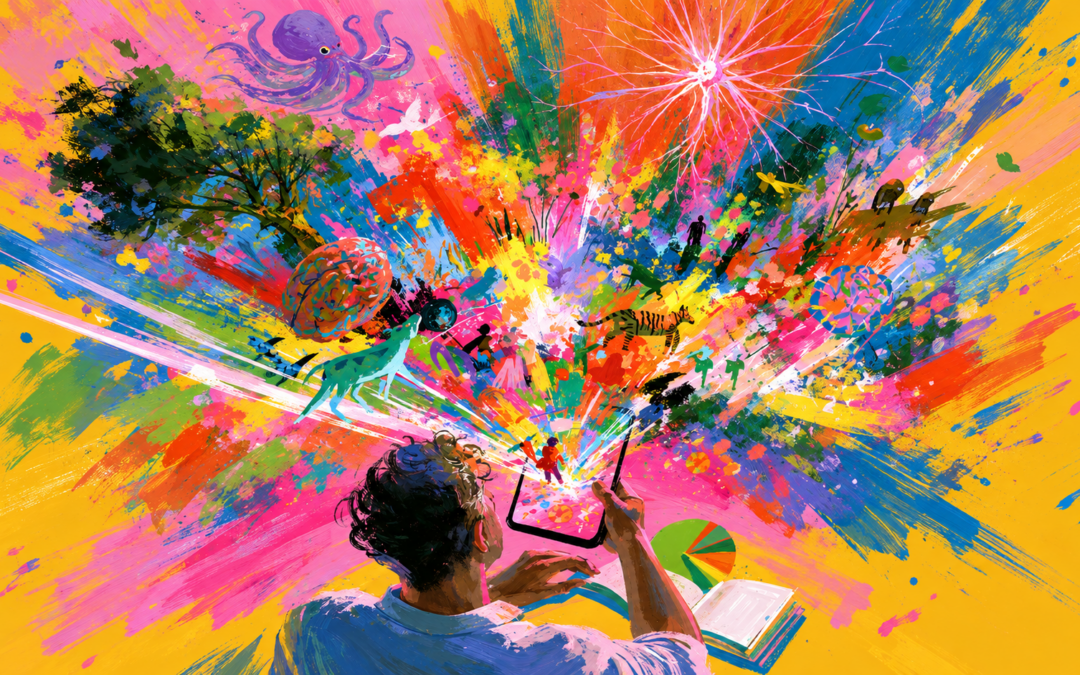
Beyond Words: How Animation and AI Could Transform Mental Health Communication
By Quint Boa | Psychotherapist, Executive Producer and Author
What if we could make mental health easier to understand, rather than simply easier to talk about?
That is the question behind my new book, Beyond Words: A Manifesto for Animation, AI and the Future of Mental Health Communication, which has just been published and is now available on Amazon.
The book brings together two areas of my professional life that have, until relatively recently, remained quite separate.
For more than 30 years, I have worked in film and animation production, helping organisations communicate complex ideas. Alongside this, I have spent three decades working as a psychotherapist, listening to people trying to understand and articulate their emotional experiences.
Over the years, I have become increasingly interested in where these two professions might meet.
In the corporate world, we routinely use animation to explain everything from financial markets to pharmaceutical products and complex technological processes. We recognise that certain ideas are more easily understood when presented visually.
Why, then, are we not making greater use of animation to help people understand anxiety, depression, trauma or addiction?
Why mental health communication needs to change
We have probably never talked about mental health as much as we do today. Psychological terminology has entered everyday conversation, and social media offers an almost endless supply of information about anxiety, attachment, trauma and relationships.
Much of this increased awareness is welcome. However, knowing the terminology does not necessarily mean we understand what is happening to us.
Someone may know the definition of anxiety without understanding why their heart begins to race before they leave the house. A teenager might recognise the symptoms of depression but still struggle to explain their feelings of emptiness or isolation to a parent.
In my clinical work, I have often been struck by the difficulty people experience when trying to put their feelings into words. Sometimes the words are simply not there. At other times, the experience is too complicated or uncomfortable to describe.
For children and young people, whose emotional vocabulary may still be developing, this can be particularly difficult.
We have invested considerable effort in making information about mental health available. Perhaps we need to think more carefully about how that information is communicated.
How animation can make the invisible visible
One of the challenges of communicating psychological experiences is that so much of what happens within us cannot be seen.
We cannot point a camera at shame, craving, attachment or fear. We can film someone experiencing these emotions, but that only takes us so far.
Animation offers a different possibility.
Through visual metaphor, movement, character and storytelling, we can give form to experiences that might otherwise be difficult to describe.
Imagine, for example, an animation that follows the increasingly intrusive thoughts of someone developing an alcohol dependency. Rather than simply listing the recognised symptoms of addiction, the film could explore how drinking gradually begins to occupy more of that person’s mental life.
Similarly, an animation about childhood anxiety might help a young person recognise something of themselves in a character who struggles with situations that others find unremarkable.
The value of these films is not necessarily in providing an explanation or an immediate solution. Sometimes, recognising an experience as familiar is valuable in itself.
An animated character may give a child a way of beginning a conversation they have previously found impossible.
“That’s how I feel” can be a surprisingly important starting point.
The role of animation in mental health education
Psychoeducation is an important part of mental healthcare, yet much of the material available to patients and families remains heavily dependent on written information.
There is nothing inherently wrong with this. Written resources can be extremely useful. But relying predominantly on language risks overlooking people who might engage more readily with visual storytelling.
Animation could play a complementary role in a number of areas, including:
-
Helping children and young people recognise and understand psychological difficulties.
-
Supporting conversations between therapists and patients.
-
Explaining addiction, anxiety, depression and eating disorders through visual storytelling.
-
Helping parents and families understand experiences they may not have encountered themselves.
-
Providing accessible psychoeducational resources for people waiting for treatment.
-
Supporting mental health prevention and awareness campaigns.
What interests me particularly is the possibility of animation becoming a shared point of reference.
A young person, parent and therapist might all watch the same short film. Each could interpret it differently, but the film would give them something tangible to discuss.
In this sense, animation has the potential to support communication rather than simply deliver information.
How AI is changing the economics of animation
For many years, there has been a fairly straightforward explanation for why animation has not been used more extensively in mental healthcare: cost.
Producing high-quality animation traditionally required specialist teams, substantial budgets and lengthy production schedules.
Large commercial organisations could justify that investment. Many mental health charities, NGOs and healthcare providers could not.
Artificial intelligence is beginning to change this.
Through my work in animation production, I have seen how AI-assisted workflows can reduce some of the time and expense involved in creating sophisticated visual content.
Projects that might previously have been financially unrealistic for smaller organisations are becoming more achievable.
A mental health charity could develop a series of short animations exploring anxiety in teenagers. A healthcare provider might create resources for young people awaiting psychological treatment. An NGO could produce multilingual films addressing mental health within communities that are difficult to reach through conventional services.
These possibilities deserve serious consideration.
Of course, cheaper production does not automatically result in better communication. Clinical expertise, research, creative judgement and responsible storytelling remain essential.
AI is a production tool. It does not determine whether a psychological message is accurate, sensitive or useful.
What it can do, however, is remove some of the barriers that have prevented good ideas from being realised.
An overlooked opportunity for mental health services
Much of the public discussion around mental healthcare understandably centres on funding, staffing, waiting lists and access to treatment.
These are fundamental concerns. But I sometimes wonder whether communication receives the attention it deserves.
Could we help young people recognise psychological difficulties earlier? Could we provide more engaging resources to those waiting for treatment? Could we help families better understand what their children are experiencing?
These are questions worth exploring, particularly when new production technologies are making visual resources more affordable.
Animation will not solve the shortage of trained mental health professionals. Nor is it a replacement for psychotherapy or other forms of clinical treatment.
But it could become a useful resource alongside existing services, and its potential should be investigated rather than assumed or dismissed.
We also need proper evaluation. Which approaches are most effective? Who benefits from them? Where might visual storytelling be inappropriate? And how do we ensure that AI-generated resources meet the necessary clinical and ethical standards?
There is considerable work to be done, but the opportunity is increasingly difficult to ignore.
Why I wrote Beyond Words
I have spent much of my working life moving between consulting rooms and animation studios.
In one, I have listened to people struggling to make sense of their emotional lives. In the other, I have worked with creative teams whose job is to make complicated ideas understandable.
It seems rather extraordinary to me that these two worlds have remained so separate.
Beyond Words is my attempt to bring them closer together.
The book explores the potential role of animation in mental health prevention, assessment, treatment and psychoeducation. It also considers how developments in artificial intelligence could make these creative resources available to organisations that have historically been unable to afford them.
I have called it a manifesto because I would like it to encourage a wider conversation about how we communicate psychological ideas.
I would particularly like to see mental health charities, NGOs, government agencies, educators and healthcare providers consider what animation might offer their work.
After three decades in both psychotherapy and film production, I certainly do not claim to have all the answers. But I believe there is an opportunity here that we have yet to explore adequately.
We have more information about mental health than ever before. The challenge now is helping people make sense of it.
That is what I hope Beyond Words will contribute to.
Beyond Words: A Manifesto for Animation, AI and the Future of Mental Health Communication by Quint Boa is available now on Amazon.
by Quint Boa, AI Video Executive & Producer
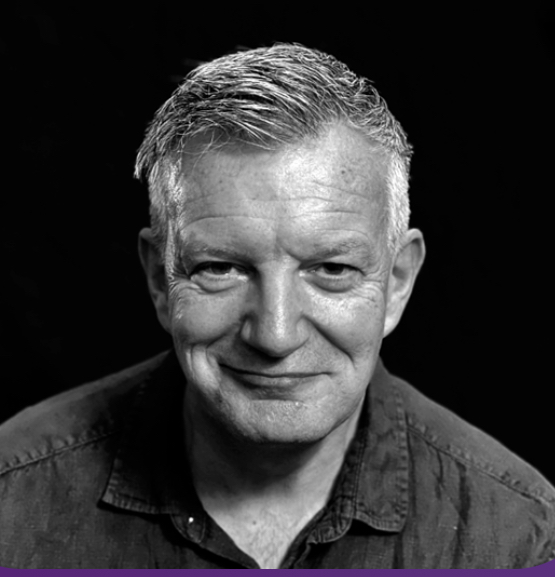
Quint is an Executive Producer specialising in AI video production for the healthcare sector. Quint has worked for over 40 years in the film, radio, and television industries. Twenty-five years ago, he founded Synima, a global video production company. Quint has embraced artificial intelligence in the creative process. Working with trusted colleagues, he’s developed a hybrid approach to AI within video production that expedites workflows and reduces costs. Quint believes ‘your health is your wealth’ and is enthiastic about every aspect of healthcare. As a UKCP-qualified psychologist, Quint feels uniquely equipped to support the communication challenges the healthcare faces by combining his experience with AI video production techniques, psychological insight and practical solutions.