
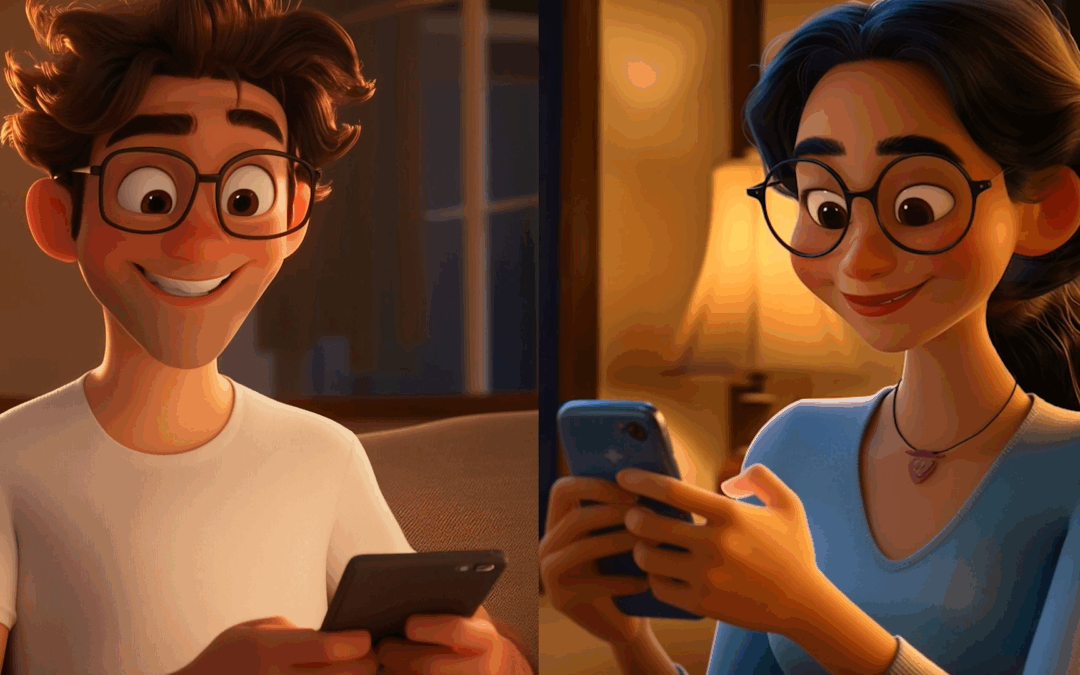
Ghosted Case Study
Using short animation to make sense of being ghosted
Where the idea came from
This project began as a question rather than a commission.
In my clinical work, I often hear people talk about being ghosted as if it should not matter. The interaction was brief. It happened on an app. Nothing was ever confirmed. And yet the emotional impact can be sharp and disorienting.
I developed this animated film as a conceptual experiment for Tinder to explore whether a short, psychologically informed animation could help people understand why ghosting hurts, without turning the experience into a problem to be fixed.
The aim was not therapy, advice, or behaviour change. It was recognition.
The context
App-based dating moves quickly. Matches appear. Conversations start. Plans are hinted at. A rhythm forms.
Then, without explanation, contact stops.
People often minimise their response because the connection was digital or short-lived. From a nervous system perspective, that distinction does not exist. Anticipation and reward are real, regardless of how the interaction began.
In practice, ghosting creates confusion rather than closure. The absence of an ending keeps the mind searching. This project set out to acknowledge that experience rather than leave it unspoken.
The psychological problem
Ghosting is difficult because it offers no narrative resolution.
Questions loop. The mind fills gaps. Dopamine-driven reward patterns intensify the sense of loss when interaction ends abruptly. Dating apps amplify anticipation through repeated signals of interest. When those signals stop, the emotional drop can feel disproportionate, but it is not irrational.
The challenge was to communicate this quickly and carefully, inside an environment designed for attention rather than reflection.
Who it was for
The animation was designed for people who had recently been ghosted, or who were likely to experience it.
The proposed use was deliberately light. The film could appear contextually within an app or be accessed through support links. It was optional, brief, and easy to ignore.
Outside the platform, the animation also worked as a private resource. Something people could return to, or share, without needing to explain themselves.
My role in shaping the work
I acted as Executive Producer and held responsibility for the psychological framing and narrative structure.
The task was to translate complex emotional and neurological processes into something that could be understood in seconds. Decisions about tone, pacing, and metaphor were shaped by my background as a UKCP psychotherapist working in addiction, attachment, and emotional regulation.
My own long-term recovery from alcoholism also informed the work. It has given me direct experience of how dopamine-driven behaviours are used to manage emotion. Dating apps can function in similar ways, and that understanding shaped how the animation approached reward, loss, and shame.
The creative approach
The animation focused on explanation rather than instruction.
It did not tell users what to do next. It showed why their reaction made sense.
Ghosting was framed as rupture without resolution, rather than rejection. Visual metaphor carried most of the meaning. Rhythm breaking suddenly. Open loops that would not close. Silence arriving without warning.
The tone remained calm and non-judgemental. There was no moral framing and no implication that the user had done something wrong.
How AI was used
The film was produced using a range of AI-supported tools for visual development and iteration.
AI helped with speed and flexibility. It did not determine the message. Narrative, psychological framing, and meaning remained human-led throughout.
Part of the Executive Producer role was knowing which tools to use, and which not to. Quality, control, and governance shaped those decisions as much as capability.
Boundaries and governance
Public-facing mental health content needs restraint, particularly when produced with generative tools.
This project operated within ethical and legal guidelines developed in collaboration with media lawyers. These covered intellectual property, platform terms, consent, and the risks associated with psychologically sensitive material.
The animation did not offer therapy, diagnosis, or advice. It offered context.
What the experiment showed
As a concept, the film demonstrated that brief psychoeducation can interrupt cycles of self-blame after ghosting.
Viewers recognised themselves quickly. Many described relief when their reaction felt understandable rather than excessive. The work suggested that acknowledgment, when timed well, can soften emotional impact without demanding action.
Platform perspective
For a platform like Tinder, this kind of content reframes wellbeing support as care rather than moderation.
AI-supported production makes it possible to test and refine this kind of work without heavy overheads. Content can be selective, contextual, and scalable rather than fixed.
A closing thought
Ghosting hurts because it disrupts attachment, reward, and narrative at the same time.
This project explored whether a platform could name that experience without fixing it. In doing so, it points toward a quieter form of support, one that acknowledges emotional reality without pathologising it.
Applying this approach
This production model is suited to digital products where emotional impact is high and attention is limited.
When AI-supported workflows are guided by clinical understanding and ethical restraint, they can create space for recognition rather than noise. That was the intention here.
by Quint Boa, AI Video Executive & Producer
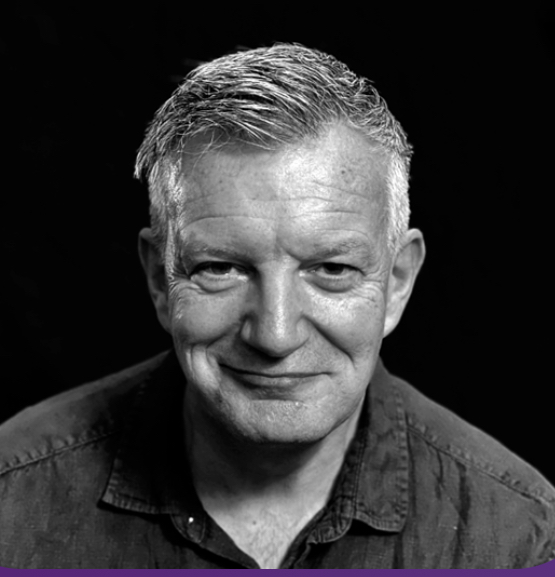
Quint is an Executive Producer specialising in AI video production for the healthcare sector. Quint has worked for over 40 years in the film, radio, and television industries. Twenty-five years ago, he founded Synima, a global video production company. Quint has embraced artificial intelligence in the creative process. Working with trusted colleagues, he’s developed a hybrid approach to AI within video production that expedites workflows and reduces costs. Quint believes ‘your health is your wealth’ and is enthiastic about every aspect of healthcare. As a UKCP-qualified psychologist, Quint feels uniquely equipped to support the communication challenges the healthcare faces by combining his experience with AI video production techniques, psychological insight and practical solutions.