Case Study
Elastoplast Spec Advert Using Animation, Metaphor, and AI
Context
Elastoplast is one of those rare products almost everyone recognises instantly. Plasters have formed part of everyday life for generations. That familiarity creates trust. However, it also creates invisibility. When a product has existed for decades, people stop actively noticing it.
This speculative advert explored how AI-driven animation could help a heritage brand stand out again. The aim was not to redesign the product or modernise it for the sake of novelty. Instead, the project sought to reframe why the product matters, using a creative approach that felt fresh, memorable, and emotionally grounded.
The Challenge
Plasters solve a simple, everyday problem. Cuts, scrapes, bruises, and minor injuries happen constantly. Despite this, the category is crowded and visually repetitive. Packaging, advertising, and messaging often blur together, making it difficult for any single brand to stand out.
From a creative perspective, the challenge is clear. Everyone already understands what a plaster does. The harder task involves reminding people why it matters. This spec advert asked a direct question. How do you make people notice plasters again without relying on fear, medical language, or technical claims. At the same time, the work needed to reflect a simple truth. Accidents happen, even when we are careful.
The Creative Idea
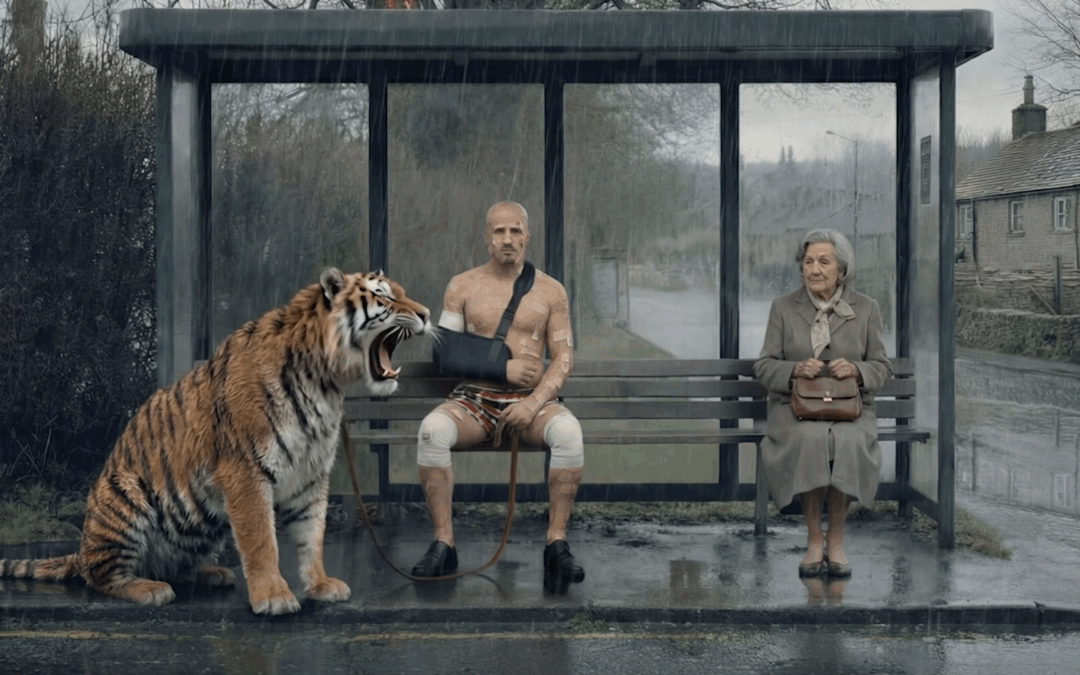
A Tiger and a Man Covered in Plasters
The core creative idea used deliberate absurdity. A tiger appears alongside a man covered head to toe in plasters. The tiger represents unpredictability. Life does not always unfold gently. Even with the best intentions, unexpected things happen.
By contrast, the man covered in plasters represents everyday resilience. The plasters signal care, recovery, and quiet persistence. Animation allows these metaphors to exist without explanation. Viewers do not question why a tiger is present. Instinctively, they understand what it represents. The contrast creates humour first and recognition second. People smile, then reflect.
Why AI Enabled This Approach
AI-driven tools made this idea viable at a speculative level. Generative workflows allowed rapid exploration of characters, environments, and tone. Different versions of the tiger were tested quickly. Levels of realism and stylisation were adjusted until the balance felt right.
AI did not replace creative judgement. Instead, it amplified it. Bold ideas could be prototyped rather than discussed in theory. This speed enabled experimentation without the cost barriers of traditional production. Short-form animated content also performs well on social platforms, where novelty and clarity matter. AI-assisted workflows increasingly support higher engagement by allowing ideas to be refined visually rather than explained verbally.
Execution and Production
As Executive Producer, I led the project from concept through to finished film. My role involved shaping the creative idea, selecting the right tools, and ensuring the final output felt intentional rather than gimmicky.
AI supported character development, scene composition, and early animation tests. Traditional storytelling principles guided pacing, framing, and emotional beats. The final film remained short, focused, and instantly understandable, even without sound. The tone stayed deliberately light. This was not about injury severity. It was about everyday mishaps and the simple reality that life is messy and human.
Why This Matters for Brands
This spec advert demonstrates how AI can unlock new creative territory for established products. Rather than repeating category conventions, brands can use animation and metaphor to reframe familiar ideas in unexpected ways.
AI also lowers the barrier to experimentation. Concepts that once required large budgets can now be explored quickly and convincingly. That freedom encourages braver thinking. From a marketing perspective, attention matters more than explanation. A tiger and a man covered in plasters are far more likely to stop a scroll than a list of features.
Quint Boa’s Role and Expertise
I bring together executive production experience, psychological insight, and hands-on knowledge of AI-driven workflows. This combination is particularly effective when working with legacy brands.
Understanding human behaviour helps shape ideas that resonate emotionally rather than intellectually. Production discipline ensures those ideas become finished films rather than abstract concepts. AI expertise makes ambitious thinking practical. This project shows how those skills combine to produce work that is playful, strategic, and grounded in how people actually perceive everyday products.
Conclusion
This Elastoplast spec advert demonstrates what is possible when AI-assisted animation meets strong creative direction. By using humour, metaphor, and surprise, the film makes a familiar product visible again.
In a world where accidents happen despite our best intentions, a simple plaster still matters. Sometimes it just takes a tiger to remind us why.