

Counting Dollars Instead of Sheep
“A good night’s sleep is invaluable,” observed the Lex column in the Financial Times recently. Big Pharma and a new generation of sleep biotech companies, it noted drily, are hoping to replace counting sheep with counting dollars.
There is something wonderfully revealing about that phrase. Because when you stand back from it for a moment, the whole thing begins to look faintly absurd. We have spent decades constructing lives almost perfectly designed to deprive ourselves of sleep, only to become excited about the technologies and pharmaceuticals that promise to restore what we have lost.
Sleep, which until remarkably recently was regarded as one of the less controversial features of being alive, has become the latest frontier of optimisation.
According to NICE, around a third of adults in Western countries experience sleep problems at least once a week. Research has linked poor sleep with everything from diabetes and cardiovascular disease to depression and Alzheimer’s. Rand Europe calculated that insomniacs would surrender around 14 per cent of their annual household income simply to feel properly rested.
People are desperate, which is perhaps why money is beginning to flow. Sleep trackers arrived first. Rings, watches and apps promised to quantify our nights. Now the pharmaceutical companies are piling in. Eli Lilly recently spent $7.8 billion acquiring Centessa, which specialises in narcolepsy. Avadel, another sleep-disorder biotech, became the subject of a bidding war before being snapped up by Alkermes. Meanwhile, Britain’s AstronaTx hopes to tackle neurological disease through improving sleep itself.
A small ecosystem of start-ups and drug companies is assembling around what used to be called bedtime, but none of this is necessarily ‘bad’. If people suffering from debilitating sleep disorders can be helped by better medicines, that is surely something to celebrate.
Yet there is something faintly comic about the situation, because many of the things preventing us from sleeping are not mysterious biological defects. They are the entirely predictable consequences of how we have chosen to live.
We work later than ever. We stare into luminous rectangles until midnight. We carry the office into the bedroom. We expose ourselves to a never-ending stream of outrage and comparison. We consume caffeine to wake ourselves up and alcohol to knock ourselves down. Then, unable to switch off, we lie awake worrying that our inability to sleep will shorten our lives, damage our brains and destroy tomorrow’s productivity.
As a UKCP psychotherapist with more than thirty years in practice, specialising in addiction, I’ve sat with many clients whose presenting problem appeared to be anxiety, depression or relationship difficulties. Yet after enough conversation something simpler sometimes emerges. They are exhausted, not metaphorically exhausted. Literally. Exhausted.
I remember one woman who arrived convinced she was becoming depressed. She was tearful, forgetful and increasingly irritable with her children. Her marriage felt strained. She worried that there was something fundamentally wrong with her.
What slowly emerged was that she had been sleeping four or five broken hours a night for months. Her evenings disappeared into emails and social media. Wine had become her way of sedating herself. Coffee revived her just enough the following morning to repeat the cycle.
The interesting thing was that she did not need a profound reinvention of her personality. What she needed was permission. Permission to disappoint people occasionally. Permission to leave things unfinished. Permission to stop. Permission to sleep.
The sleep scientist Matthew Walker has described sleep as “the greatest legal performance-enhancing drug that most people are probably neglecting.” Yet perhaps even the language of performance misses something important.
Because what insomniacs really long for is not simply eight hours of unconsciousness. They long for relief. For safety. For peace. They long, if only briefly, to stop supervising life.
Sleep requires trust. You cannot force yourself to sleep any more than you can force yourself to fall in love. The harder you pursue it, the more elusive it becomes. Which creates another modern irony. We increasingly optimise sleep itself. We score it, analyse it and benchmark it. Then we worry about whether we are sleeping correctly. Unsurprisingly, anxiety about sleep becomes another cause of insomnia.
Human beings are not machines that occasionally require maintenance. Rest is not a regrettable interruption to productivity. Sleep is not time wasted; it’s part of life.
No doubt remarkable new treatments will emerge over the coming years. Eli Lilly, Centessa, Alkermes and AstronaTx may alleviate enormous suffering. But it would be a curious state of affairs if humanity ended up spending billions trying to engineer solutions to problems partly caused by our inability to do something that every cat in the world seems to manage effortlessly.
Perhaps what exhausted people need most is not another wearable, another dashboard or another miracle drug. Perhaps they need something much less profitable. A quieter evening. A darker room, and radical ‘permission’ to leave the world alone until morning.
by Quint Boa, AI Video Executive & Producer
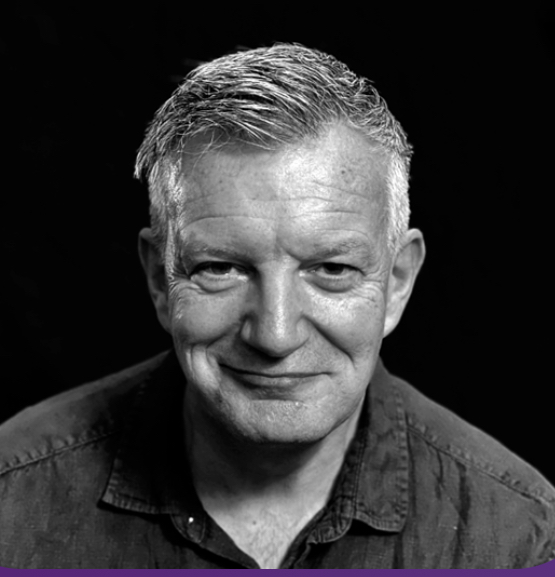
Quint is an Executive Producer specialising in AI video production for the healthcare sector. Quint has worked for over 40 years in the film, radio, and television industries. Twenty-five years ago, he founded Synima, a global video production company. Quint has embraced artificial intelligence in the creative process. Working with trusted colleagues, he’s developed a hybrid approach to AI within video production that expedites workflows and reduces costs. Quint believes ‘your health is your wealth’ and is enthiastic about every aspect of healthcare. As a UKCP-qualified psychologist, Quint feels uniquely equipped to support the communication challenges the healthcare faces by combining his experience with AI video production techniques, psychological insight and practical solutions.