The Challenge: Communicating the Psychology of Anorexia
Anorexia nervosa is a serious and complex mental health condition, yet much of the public understanding of the illness remains focused on food, weight and physical appearance. The psychological and emotional experiences that can underpin anorexia are often less visible and considerably more difficult to articulate.
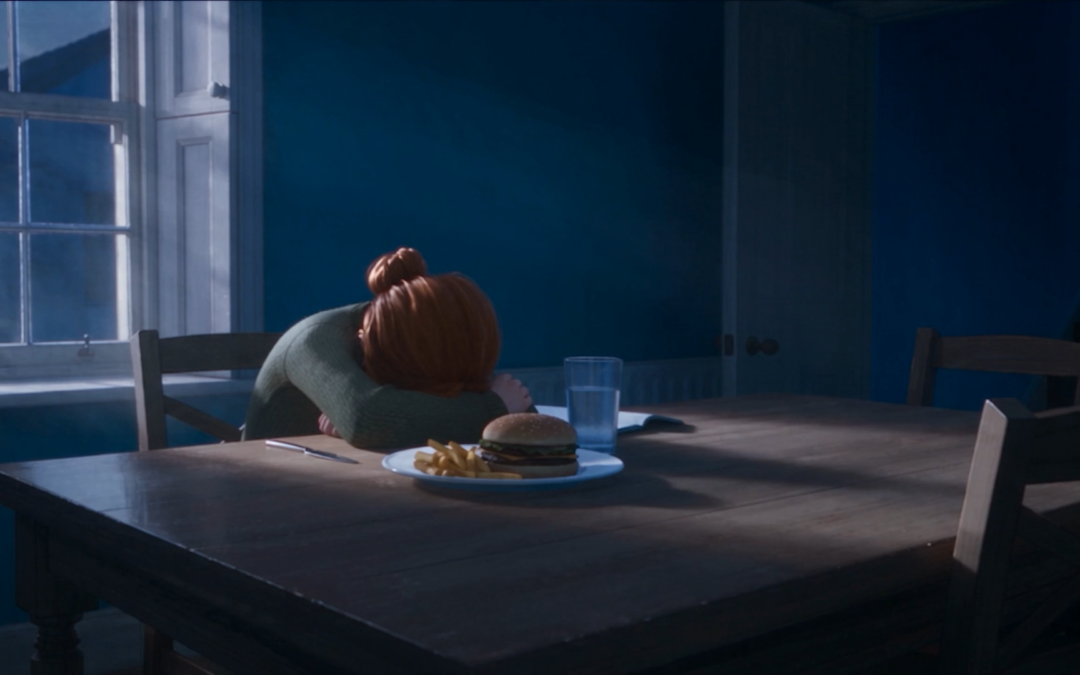
Working with Ruth Jacobs, founder of Certified Minds, we produced a character-based animation designed to explore the inner world of someone experiencing anorexia.
A registered mental health nurse and former ward manager specialising in adolescent eating disorders, Ruth established Certified Minds to equip healthcare professionals, educators and frontline staff with the knowledge and confidence to recognise psychological distress and respond with compassion.
The animation complements this mission by encouraging audiences to look beyond observable behaviour and consider the emotional experience of the individual.
The Creative Approach: Understanding Anorexia Through Animation
The animation follows a young woman as her relationship with anorexia becomes increasingly complex.
Initially, the illness appears to offer a sense of reassurance and control in an otherwise overwhelming world. Gradually, however, this perceived source of security becomes restrictive, affecting her relationships, independence, identity and sense of self-worth.
Through character-based storytelling, the animation explores perfectionism, compulsive behaviours, social comparison, withdrawal and the relentless internal dialogue that can accompany an eating disorder.
One of its central objectives is to communicate the psychological conflict experienced by someone who may desperately want to eat but feels unable to do so.
Rather than presenting anorexia simply as a collection of symptoms, the film seeks to humanise the experience of living with the illness.
Giving Expression to the Inner World
The narrative reflects many people’s experiences of anorexia, whilst recognising that no two individuals experience an eating disorder in precisely the same way.
Character-based animation can put into words and images what some people feel inside but struggle to communicate.
It can articulate the inner world and allow people to express it in the outer world. In this sense, animation can act as a psychological midwife, helping bring difficult emotions into the world, where they can be acknowledged, understood and addressed.
As humanistic psychologist Carl Rogers observed of the experience of being heard:
“I am able to re-perceive my world in a new way and to go on.”
For someone experiencing anorexia, recognising aspects of themselves in an animated character may provide a starting point for conversations that previously felt overwhelming or impossible.
Supporting Clinical Practice and Mental Health Education
The animation was produced to support greater understanding among healthcare professionals, therapists, educators, parents and families.
It offers a potential resource for psychoeducation and professional training, encouraging curiosity about the emotional needs and psychological processes that may lie beneath observable behaviours.
The Role of AI Animation in Clinical Resources
Advances in AI animation are also making character-based clinical resources more financially accessible to healthcare organisations, independent practitioners and mental health charities. Their development should remain grounded in peer-reviewed evidence and subject to independent clinical review.
Making the Invisible Visible
Our collaboration with Certified Minds illustrates how clinical knowledge and creative storytelling can work together to communicate complex psychological experiences.
Animation cannot replace specialist eating disorder treatment, but it can help create the conditions in which meaningful conversations begin.
By making the invisible visible, we hope to encourage earlier recognition, greater understanding and more compassionate support, reminding those experiencing anorexia that recovery is possible and that they need not face the illness alone.