

Introduction
To borrow a line from the film Taken, I have a very particular set of skills. I am a UKCP qualified psychotherapist with more than thirty years in practice and have spent forty years in the film, television and radio industries. My career has taken me from life as a BBC cameraman to being a BAFTA nominated actor, and eventually to founding and directing Synima for the past twenty five years.
These experiences might appear unrelated at first glance, yet they form a single thread. Each role has required an understanding of how people think, how stories influence behaviour and how technology shapes our emotional lives. Artificial intelligence is simply the latest chapter in that long conversation. My consultancy begins where these disciplines meet.
In recent years my work has evolved into that of an AI video consultant, running seminars and workshops for agencies and organisations that are trying to find their footing in this fast moving landscape. Participants often arrive exhilarated by the tools and leave slightly sobered by the questions.
Why Healthcare and Enterprise Need AI Guidance
AI video tools offer a seductive promise. Anyone can generate a training video, a patient explainer or a corporate message in minutes. Healthcare leaders tell me they feel a mix of excitement and apprehension. Enterprise clients often describe uncertainty about brand dilution, misinformation and the pace of change.
The danger is not the technology. The real risk lies in assuming that pressing the button is all that is required. A philosopher once observed that the map is not the territory. It is a reminder that representations never replace reality. AI now produces representations at extraordinary speed, yet organisations still need someone to help them navigate the complex ground beneath.
What an AI Consultant Actually Does
AI consultancy sits at the intersection of psychology, communication and technology. The work spans several key domains.
1. Builds Internal AI Capability
The trend towards doing it internally is real, and it is healthy. Teams want to understand the tools rather than outsourcing everything. I train them in safe prompting, coherent storytelling, brand consistency and responsible use. Workshops show how quickly an idea becomes a visual asset, which reveals why strong internal guardrails matter.
2. Provides Accountability
Accountability becomes blurred when AI accelerates production and removes traditional approval structures. Someone needs to stand behind the system and ensure it meets standards of safety, accuracy and organisational integrity. Put bluntly, I am the throat to choke if accountability issues arise. My role is to carry responsibility for coherence, compliance and best practice so internal teams are not left exposed.
3. Clarifies Purpose Before Any Tools Are Used
The first question is always: why are you using AI? Healthcare and enterprise teams often explore tools without articulating the underlying problem they hope to solve, beyond the understandable desire to reduce agency costs. My job is to guide them back to fundamentals. Clarity of purpose shapes every decision that follows.
4. Designs Safe and Repeatable Workflows
AI content creation looks simple. The governance behind it is not. I work with organisations to establish toolchains, approval pathways, risk assessments, brand guardrails, compliance workflows and metadata structures. These systems ensure rapid production does not compromise safety, accuracy or legal defensibility.
5. Brings Psychological and Behavioural Insight
Psychotherapy has taught me how people respond under pressure, uncertainty and rapid change. AI introduces all three. Healthcare communication relies on trust and corporate messaging depends on emotional clarity. The psychological dimension matters as much as the technical one. A well known psychologist once wrote that awareness is the first step in transformation. In AI adoption, awareness of risk, perception and user impact becomes central.
6. Offers Creative and Ethical Oversight
Automation cannot replace judgement. Healthcare, mental health, patient consent, sensitive data and complex brand identity all require careful oversight. Organisations need someone who can evaluate output with creative intuition and ethical awareness, and that perspective is central to my role.
7. Anchors the Human in the Machine Age
AI can tempt us into outsourcing judgement. My work brings people back to themselves. Clear thinking, boundaries and emotional literacy allow organisations to benefit from AI without losing their bearings.
Why This Work Matters
AI will not replace clinicians, communicators or leaders. It will, however, overwhelm those without guidance. Organisations need someone who understands the technical landscape while holding the psychological, ethical and relational aspects of communication. The philosopher reminded us that the map is not the territory. The psychologist reminded us that awareness initiates transformation. Taken together, these ideas provide a compass for navigating AI responsibly.
What This Consultancy Offers Healthcare and Enterprise
-
Strategic clarity
-
Safe and compliant workflows
-
Creative oversight
-
Behavioural intelligence
-
Technical governance
-
Risk mitigation
-
Brand protection
-
Human centred decision making
This work is not about replacing people. It is about helping people stay fully themselves in a world accelerating beyond anything we have previously known.
by Quint Boa, AI Video Executive & Producer
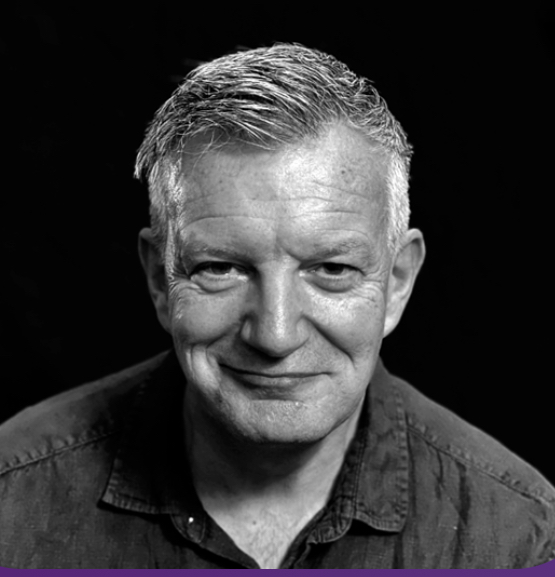
Quint is an Executive Producer specialising in AI video production for the healthcare sector. Quint has worked for over 40 years in the film, radio, and television industries. Twenty-five years ago, he founded Synima, a global video production company. Quint has embraced artificial intelligence in the creative process. Working with trusted colleagues, he’s developed a hybrid approach to AI within video production that expedites workflows and reduces costs. Quint believes ‘your health is your wealth’ and is enthiastic about every aspect of healthcare. As a UKCP-qualified psychologist, Quint feels uniquely equipped to support the communication challenges the healthcare faces by combining his experience with AI video production techniques, psychological insight and practical solutions.