Understanding Anxiety: Exploring Mental Health Through Animation
Using character-led storytelling and visual metaphor to explore the psychology of anxiety and its impact on emotional wellbeing.
The Challenge: Changing How We Understand Anxiety
Anxiety is one of the most familiar yet frequently misunderstood human emotions. Although often regarded as something to overcome or eliminate, anxiety is a natural psychological response that can serve an important protective function.
Understanding Anxiety was produced to explore this perspective, using mental health animation to communicate complex psychological concepts in an accessible and emotionally engaging way.
The film encourages audiences to reconsider their relationship with anxiety, understand its potential origins and develop greater self-awareness and self-compassion.
The Creative Approach: Bringing Anxiety to Life Through Animation
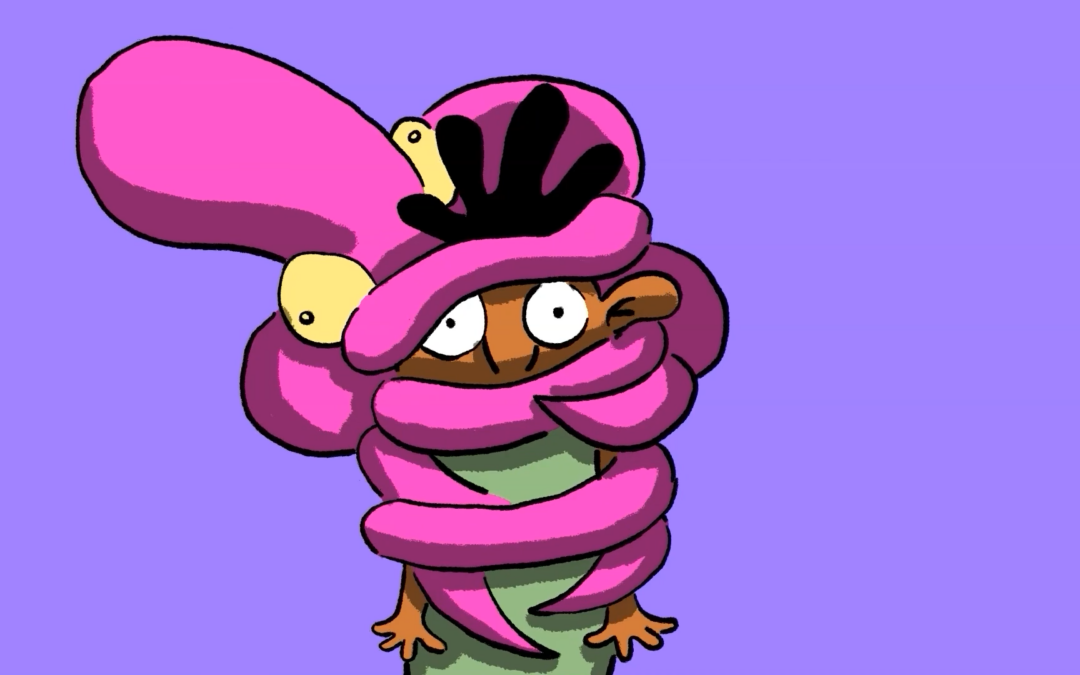
The animation personifies anxiety as a brightly coloured, octopus-like creature that accompanies the central character from childhood into adulthood.
Initially, the creature offers protection, helping the child navigate an unpredictable emotional environment. The child learns to anticipate the feelings and behaviours of those around them, developing a heightened awareness of potential threats.
As the character grows older, the creature’s protective embrace becomes increasingly restrictive. What once provided emotional security begins to interfere with independence, relationships and everyday life.
Through expressive character design, movement and visual metaphor, the animation communicates this psychological process without relying on complex clinical language.
One sequence depicts the character descending into a spiral, capturing the exhausting and often familiar experience of becoming anxious about feeling anxious.
Understanding Anxiety from a Psychotherapeutic Perspective
Exploring the origins of anxiety can be a valuable part of psychotherapy and psychological understanding.
Someone who grew up in an unpredictable household, for example, may have learned to constantly monitor the emotional atmosphere around them. Although this heightened awareness may have served a protective purpose during childhood, it can become exhausting when carried into adult relationships.
Recognising how these responses developed can help individuals understand their behaviour and approach their difficulties with greater compassion.
The film explores one possible psychological explanation for anxiety, acknowledging that anxiety has many causes and that everyone’s experience is different.
Developing a Healthier Relationship with Anxiety
A central theme of the animation is how attempts to suppress or resist anxiety can sometimes intensify feelings of distress.
Rather than presenting the destruction of the creature as a solution, the film explores how acknowledging anxiety and understanding its protective function may help individuals change their relationship with it.
As humanistic psychologist Carl Rogers wrote:
“The curious paradox is that when I accept myself as I am, then I change.”
The concluding scenes reflect the possibility of living with greater emotional freedom, without allowing anxiety to govern everyday decisions and experiences.
The Role of Animation in Mental Health Education
Animation is a valuable medium for mental health communication because it can give visual form to thoughts, feelings and psychological processes that are otherwise difficult to describe.
For psychotherapists, counsellors and healthcare professionals, animated psychoeducational resources can help introduce sensitive subjects, facilitate therapeutic conversations and support patient understanding.
Visual storytelling is particularly useful when communicating experiences such as anxiety, depression, addiction and emotional distress, where traditional written explanations may feel inaccessible or overly clinical.
How AI Animation Can Improve Access to Mental Health Resources
Advances in AI-assisted animation are creating new opportunities for healthcare providers, mental health organisations and charities to produce high-quality educational content more cost-effectively.
AI animation can help reduce production costs while allowing educational resources to be adapted for different audiences, languages, age groups and digital platforms.
However, clinical accuracy remains essential. Mental health content intended for clinical use should be informed by peer-reviewed research and independently reviewed by appropriately qualified professionals.
Combining psychotherapeutic expertise with professional animation production offers an opportunity to develop engaging resources that are both psychologically informed and visually compelling.
Making Anxiety Easier to Understand
Understanding Anxiety demonstrates how animation can make complex psychological experiences more accessible and easier to discuss.
By exploring why certain emotional responses develop, the film encourages audiences to approach anxiety with greater understanding and consider how their relationship with it might change over time.