
Information Is Not Communication
We are surrounded by more information than any generation in history. We have instant access to medical guidance, psychological terminology, diagnostic criteria, treatment options and explanations of almost every condition imaginable. Yet having access to information is not the same as understanding it, and understanding something intellectually is not the same as being able to use it. That distinction sits at the heart of my new book, Beyond Words: A Manifesto for Animation, AI and the Future of Mental Health Communication.
Healthcare has become very good at producing information. Leaflets, websites, PDFs, patient portals and increasingly sophisticated clinical resources are everywhere. The problem is that information is usually delivered in the form most convenient for the organisation producing it rather than the person trying to understand it. Most often, that means words.
Words are extraordinary tools, but we have perhaps become too dependent on them. We assume that if something has been explained accurately, it has therefore been communicated successfully. A doctor can describe insulin resistance. A therapist can explain attachment. A leaflet can describe panic attacks. A website can list the symptoms of depression. Technically, the information has been transmitted, but whether the person on the receiving end has actually formed a useful mental model of what is happening is another question entirely.
Communication is not simply transmission. It is what happens when information changes shape inside somebody else’s mind. This becomes particularly important in mental health because so much of psychology is abstract. Anxiety has no physical appearance. Neither do shame, craving, avoidance, trauma, attachment or depression. We can describe these things, but description requires the listener to construct the image for themselves.
Animation can do something different because it can make the invisible visible. Anxiety can become an octopus whose arms both protect and restrict. Depression can drain the colour from a room. A craving can become something that pulls. Shame can physically shrink a character. An unhealthy relationship pattern can become a loop that two people repeatedly travel around without realising they are returning to the same place. None of these images is literally true, but that is precisely why they can be useful. They provide a temporary visual model that allows somebody to see a psychological process from the outside.
For years, working in animation, I used a simple explanation of when animation becomes useful. Animation works particularly well when something is too big, too small or too complicated to film. A planet colliding with another planet is too big. A biological process inside a cell is too small. Hundreds of aircraft moving through an air traffic system may be too complicated to explain clearly with conventional filming. There is another category that matters enormously in healthcare, however, and that is things that are too abstract.
You cannot film anxiety itself. You can film somebody experiencing its consequences, but you cannot point a camera at anxiety. Animation gives us permission to invent an image for something that has no image of its own. That matters because human beings do not process everything through language. We think through images, movement, metaphor, memory, emotion, sound and spatial relationships. Language occupies only part of our cognitive bandwidth, yet healthcare communication often behaves as though it occupies all of it.
There is also an uncomfortable reality about attention. People do not encounter healthcare information under laboratory conditions. They may be frightened, distracted, exhausted or overwhelmed. A parent waiting months for a child to be assessed does not necessarily want another twelve-page PDF. A teenager experiencing panic may not absorb a detailed explanation of the autonomic nervous system. Someone newly diagnosed with a serious illness may hear the doctor’s words while retaining very little of what was actually said. The answer is not to remove language, but to widen the bandwidth through which understanding can happen.
Animation can combine language with image, metaphor, movement, sound and narrative. It can explain something once and allow it to be replayed repeatedly. It can be translated, shared with families, watched privately on a phone and used by clinicians as a common visual reference point from which a conversation can begin. This is particularly valuable in mental health, where the most difficult concepts are often the ones that resist simple verbal explanation.
Until recently, the obstacle was cost. High-quality animation required large production teams, long schedules and budgets beyond the reach of many healthcare organisations, charities and NGOs. AI is beginning to change that equation. AI-assisted animation will not eliminate the need for writers, animators, clinicians or psychological expertise. If anything, it makes judgement more important because producing an image is becoming easier while deciding what the image should communicate remains difficult.
The cost and speed of production are nevertheless falling rapidly enough that organisations which previously could not contemplate animation can begin to use it seriously. That could prove far more significant than simply producing cheaper films, because it allows us to question one of healthcare’s oldest assumptions: that giving somebody information means we have communicated with them. We have only communicated when the person on the receiving end can understand, retain and use what we are trying to say, and animation may prove to be one of the most effective ways of helping that happen.
by Quint Boa, AI Video Executive & Producer
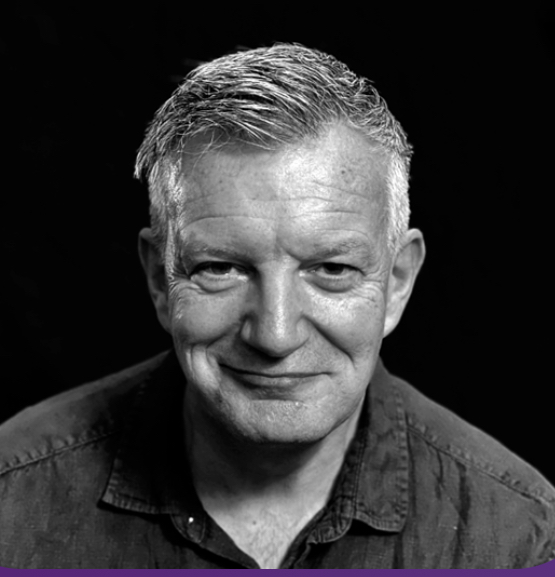
Quint is an Executive Producer specialising in AI video production for the healthcare sector. Quint has worked for over 40 years in the film, radio, and television industries. Twenty-five years ago, he founded Synima, a global video production company. Quint has embraced artificial intelligence in the creative process. Working with trusted colleagues, he’s developed a hybrid approach to AI within video production that expedites workflows and reduces costs. Quint believes ‘your health is your wealth’ and is enthiastic about every aspect of healthcare. As a UKCP-qualified psychologist, Quint feels uniquely equipped to support the communication challenges the healthcare faces by combining his experience with AI video production techniques, psychological insight and practical solutions.