
AI Is Putting High-End Healthcare Animation Within Reach of Small Charities
A new breast-awareness animation for The Pink Bob shows how falling production costs could transform the way charities communicate prevention, diagnosis, treatment and psychoeducation.
59,400 people are diagnosed with breast cancer in the UK each year. Only 45% of UK women regularly check their breasts for signs of the disease. Around two thirds of breast cancers in England are identified after a woman notices a new or unusual change and takes it to her GP.
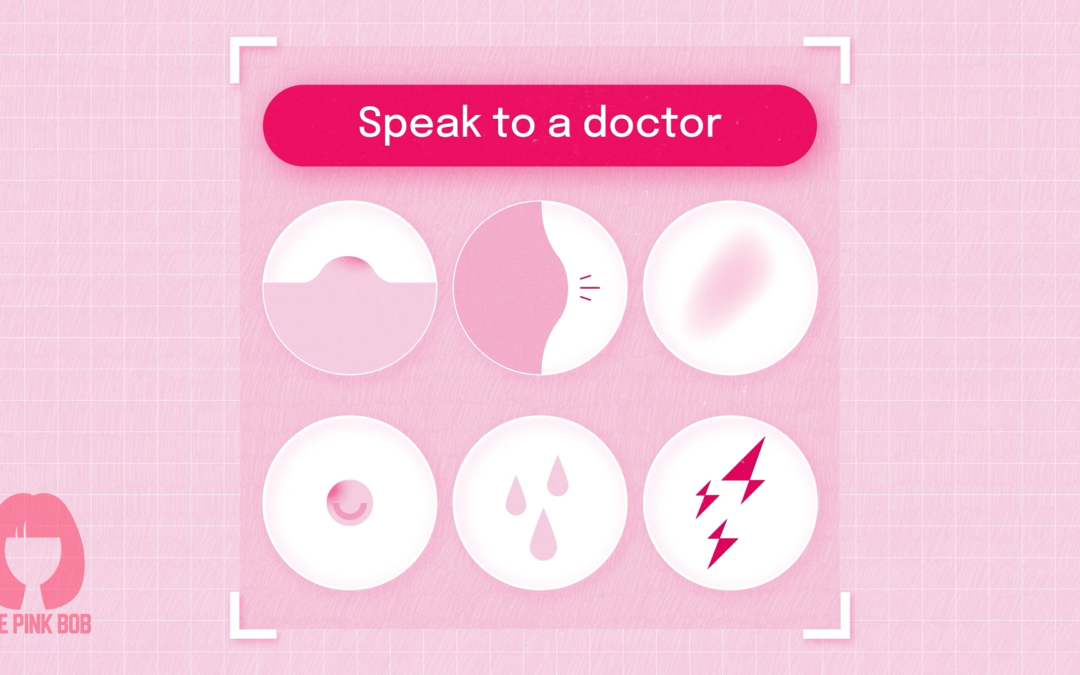
Those three figures explain why a new 40-second animation produced for breast cancer organisation The Pink Bob matters.
They also point towards a much bigger story.
Artificial intelligence is rapidly reducing the cost of producing high-quality animation, putting a form of healthcare communication that was once largely restricted to pharmaceutical companies, major institutions and large corporate budgets within reach of small charities and NGOs.
The Pink Bob is a case in point.
Founded by Federica Zanghirella following her own experience of breast cancer, the organisation wanted a simple animation showing women how to check their breasts. Under a conventional animation production model, a bespoke piece of this quality would have been beyond the organisation’s available budget.
AI-assisted production changed that equation.
The result is a short, high-quality animation designed to perform one very specific public-health function: show women what breast checking actually involves.
That distinction between telling people and showing people is important.
Only 45% of women are regularly checking
Breast cancer is the most common cancer in the UK. Around 59,400 people are diagnosed every year, more than 160 people every day, and approximately one in seven UK women will develop breast cancer during their lifetime.
Yet research published in August 2026 found that only 45% of UK women regularly check their breasts, defined in the research as at least once every six weeks. That proportion has fallen from 55% in January 2022.
Breast Cancer Now has previously identified some of the practical reasons women fail to check. Women report forgetting, not having established the habit, lacking confidence and, significantly, simply not knowing how to do it.
That last problem is precisely what animation can address.
Women eligible for routine NHS breast screening in England are invited every three years from the age of 50 until their 71st birthday. The first invitation normally arrives between 50 and 53.
Screening is vital, but it is not the whole answer. Cancer can develop between mammograms, and the majority of breast cancers are not initially detected through the screening programme. Breast Cancer Now reports that around two thirds of breast cancers in England are found after women notice a new or unusual breast change and have it investigated by a GP.
Federica Zanghirella knows how important that can be.
She says that in her own case a tumour grew from approximately the size of a raisin to the size of a tangerine in around three months. She discovered the change because she checked herself.
Her experience became part of the impetus behind The Pink Bob and, eventually, behind this animation.
The economics of animation have changed
For decades there has been a straightforward problem with using animation for public-health communication. It works, but it costs money.
Traditional bespoke animation can require illustrators, animators, designers, compositors, editors, producers, sound specialists and days or weeks of production. For a pharmaceutical company or major healthcare provider this may be affordable. For a small breast cancer charity, addiction service, mental health organisation or patient support group, it frequently is not.
That is changing remarkably quickly.
AI-assisted production can now compress significant parts of the animation process, reducing the number of production hours required while still allowing experienced filmmakers to control the script, imagery, editing, accuracy and final message.
The important development is not that AI can make pictures. It is that the cost threshold for sophisticated visual communication is falling.
That has potentially significant implications for healthcare.
The Pink Bob could afford a 40-second animation because the economics have changed. The same process could allow a small mental health charity to explain panic attacks, an addiction service to visualise the cycle of craving and relapse, a hospital to prepare a frightened child for an MRI scan, or a patient organisation to explain what happens following a diagnosis.
These are not experimental uses of AI. They are practical communication problems that already exist.
Prevention, diagnosis, treatment and psychoeducation
Healthcare communication broadly falls across four areas: prevention, diagnosis, treatment and psychoeducation.
Every one of them contains information that is often difficult to communicate with words alone.
How do you examine your breasts? What happens inside the body during a panic attack? What will happen when you arrive for radiotherapy? How does insulin regulate blood glucose? What does compulsive reassurance do to an anxiety disorder? What should parents expect when their child begins treatment for an eating disorder?
A leaflet can explain these things. Animation can show them.
The psychologist Albert Bandura observed that much human behaviour is learned through observing others. The philosopher Ludwig Wittgenstein put the problem from another direction when he wrote, “The limits of my language mean the limits of my world.”
Healthcare routinely encounters both problems. We ask people to learn behaviours and understand complex processes, then give them words with which to do it.
In my own psychotherapy practice, I have often watched a patient struggle with a verbal explanation of an anxiety cycle, then understand it almost immediately when the same cycle is drawn visually. Nothing about the psychology has changed. The information has simply been given a form the brain can grasp more easily.
Animation can do that at scale.
AI should reduce the cost, not the standards
None of this means handing healthcare communication over to an AI model.
The opposite is required.
A visually impressive piece of inaccurate health information is potentially more dangerous precisely because it is impressive. Scripts must be clinically sound. Claims need checking. Visual metaphors need scrutiny. Language needs to avoid unnecessary alarm, stigma and oversimplification.
AI can reduce the cost of production. It does not remove the need for human judgement.
That is particularly important as charities begin experimenting with generative technology. The opportunity is not to produce vast quantities of cheap content. It is to produce useful content that previously would not have been produced at all.
Forty seconds that can be shared indefinitely
Once completed, The Pink Bob animation can live almost anywhere.
It can be embedded on a website, posted on Instagram or LinkedIn, shared through WhatsApp, used by healthcare professionals, included in presentations or sent directly from one woman to another.
The cost of showing it to the ten-thousandth viewer is essentially the same as showing it to the first.
For small charities, that is an important change in the economics of communication.
AI is usually discussed in healthcare in terms of diagnostics, clinical decision-making, drug discovery and automation. Those are important areas, but there is another application receiving considerably less attention.
AI is making communication cheaper.
When only 45% of UK women are regularly checking their breasts, when around 59,400 people are diagnosed with breast cancer each year, and when roughly two thirds of cases in England are found following the discovery of a new or unusual change, communicating something clearly is not a cosmetic exercise.
For organisations such as The Pink Bob, falling production costs mean that high-quality animation is no longer automatically beyond their reach.
That is a good news story about artificial intelligence worth telling.
by Quint Boa, AI Video Executive & Producer
Quint is an Executive Producer specialising in AI video production for the healthcare sector. Quint has worked for over 40 years in the film, radio, and television industries. Twenty-five years ago, he founded Synima, a global video production company. Quint has embraced artificial intelligence in the creative process. Working with trusted colleagues, he’s developed a hybrid approach to AI within video production that expedites workflows and reduces costs. Quint believes ‘your health is your wealth’ and is enthiastic about every aspect of healthcare. As a UKCP-qualified psychologist, Quint feels uniquely equipped to support the communication challenges the healthcare faces by combining his experience with AI video production techniques, psychological insight and practical solutions.