How This Tool Can Transform Mental-Health Communication
Animation is one of the most effective ways to communicate complicated, sensitive or emotionally difficult information. This is particularly true in healthcare and mental health, where people may be frightened, overwhelmed, ashamed or simply unable to absorb a lengthy written explanation.
As both a psychotherapist and a founder of global production company Synima, I have seen how carefully designed animation can make psychological ideas easier to understand. It can explain what somebody is experiencing, reduce stigma and give people language for feelings they have struggled to express.
The problem is that professional animation has traditionally been expensive. Research, scripting, storyboarding, illustration, animation, voiceover and post-production can put it beyond the budgets of many charities, NHS services, NGOs and smaller healthcare organisations.
AIAnimation.com can help change that.
A complete AI production platform
AIAnimation.com is an end-to-end production platform for professional creatives, agencies and in-house teams.
Most AI platforms generate an individual image or short video clip. AIAnimation.com connects the entire production: the brief, script, characters, storyboards, shots, references, generated assets, feedback, approvals and editorial handoff.
Developed in collaboration with Synima and informed by more than 25 years of professional video and animation experience, it is designed for organisations that need to produce credible, consistent and accountable content – not simply experiment with AI.
Why this matters in mental health
Mental-health information is often delivered through leaflets, reports or densely written webpages. These formats may be appropriate for professionals, but they do not always reach the people who most need support.
Animation can make subjects such as anxiety, depression, addiction, trauma, anger and neurodiversity more accessible and relatable. It can illustrate internal experiences that cannot easily be filmed and can communicate without asking vulnerable people to appear on camera.
It can be used to:
- Explain symptoms and treatment options.
- Prepare patients for appointments or procedures.
- Support psychoeducation between therapy sessions.
- Help children understand difficult feelings.
- Explain addiction within a family system.
- Reduce shame surrounding mental-health conditions.
- Support carers and family members.
- Train healthcare professionals and volunteers.
- Correct misinformation circulating on social media.
- Reach culturally and linguistically diverse communities.
A well-designed animation cannot diagnose or replace treatment. It can, however, help people understand what is happening, recognise when they may need support and engage more confidently with professional care.
Making healthcare animation more affordable
AIAnimation.com can reduce the time and cost associated with several labour-intensive production stages:
- Research and concept exploration.
- Script development and simplification.
- Visual-style testing.
- Storyboard creation.
- Character and environment development.
- Image and video generation.
- Voiceovers and subtitles.
- Translation and localisation.
- Alternative edits and social-media versions.
This allows a healthcare organisation to create more value from one core production. A single animation might become a full-length patient resource, several short social videos, translated versions, training materials and still images for a wider campaign.
AI does not remove the need for experienced writers, animators, clinicians or producers. It allows the available budget to be concentrated on the areas that matter most: clinical accuracy, creative quality, accessibility and audience impact.
Ani: a production-aware AI copilot
At the centre of AIAnimation.com is Ani, a production-aware AI copilot.
Unlike a general AI assistant responding to an isolated prompt, Ani understands the production surrounding the request – including its audience, script, characters, visual references, shots, assets and feedback.
This is particularly valuable in healthcare, where terminology, tone and visual consistency must be maintained across an entire production. Every prompt begins with the relevant context, while approved decisions and reference materials remain connected to the project.
AI can generate an asset in seconds. Ani helps ensure that it belongs within a coherent and properly managed production.
Protecting sensitive material and intellectual property
Healthcare organisations must be particularly cautious about what staff upload to public AI tools. Confidential documents, patient information and identifiable personal data should never be entered into generative systems without appropriate safeguards and authorisation.
AIAnimation.com offers a more controlled environment. Selected models can be accessed through enterprise agreements designed to ringfence client prompts, reference materials and production assets. Where contractually supported, customer content is not used to train external models.
The platform can also retain:
- The model and settings used.
- Prompts and reference materials.
- Authorship and revision history.
- Likeness permissions.
- Supporting IP documentation.
- Clinical and organisational feedback.
- Approval and sign-off records.
This is important for healthcare organisations that may need to demonstrate how content was created, who reviewed it and which version was approved.
Constantly developing alongside the technology
Generative AI is advancing rapidly. Healthcare organisations should not need to research and purchase a separate subscription every time a new image, video or voice model appears.
AIAnimation.com is continually updated as the technology develops. New models and capabilities can be assessed and incorporated into the existing production environment, giving teams access to evolving technology without repeatedly rebuilding their workflows.
Human-led and clinically reviewed
The strongest healthcare content combines the efficiency of AIAnimation.com with professional human expertise.
That may include:
- Clinicians and subject-matter experts.
- People with lived experience.
- Writers and creative directors.
- Animators and editors.
- Accessibility specialists.
- Clinical or peer reviewers.
- Safeguarding and communications teams.
AI can help make the production faster and more affordable. Humans must remain responsible for clinical accuracy, empathy, ethics, safeguarding and final approval.
A significant opportunity for mental healthcare
Healthcare organisations face a continuing challenge: how to communicate reliable information at scale when budgets and clinical time are limited.
AI-assisted animation offers a practical response. The same core material can be presented visually, adapted for different audiences, translated into multiple languages and distributed through the channels people already use.
For mental health, the opportunity is especially significant. Animation can make the invisible visible. It can represent thoughts, emotions, memories and bodily sensations in ways that live-action video often cannot. It can help someone feel recognised rather than judged and turn a difficult clinical explanation into something understandable and memorable.
Most AI platforms generate individual assets. AIAnimation.com connects, protects and manages the entire production around them.
By combining leading AI models with professional production workflows, AIAnimation.com can help healthcare providers, charities and NGOs create more accessible mental-health resources – more quickly, affordably and at greater scale.
Organisations can explore the platform at AIAnimation.com.
by Quint Boa, AI Video Executive & Producer
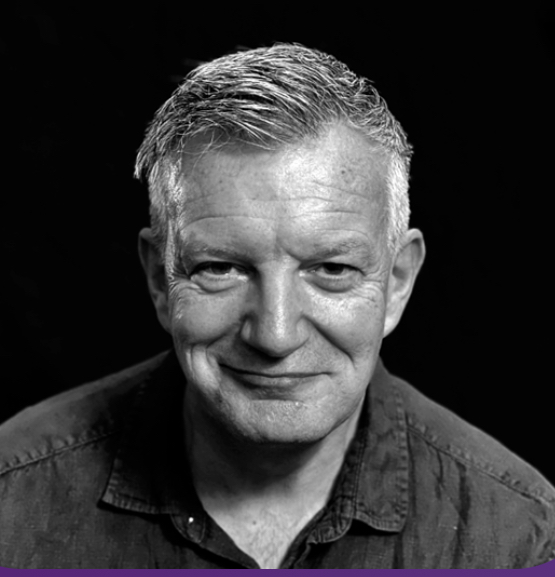
Quint is an Executive Producer specialising in AI video production for the healthcare sector. Quint has worked for over 40 years in the film, radio, and television industries. Twenty-five years ago, he founded Synima, a global video production company. Quint has embraced artificial intelligence in the creative process. Working with trusted colleagues, he’s developed a hybrid approach to AI within video production that expedites workflows and reduces costs. Quint believes ‘your health is your wealth’ and is enthiastic about every aspect of healthcare. As a UKCP-qualified psychologist, Quint feels uniquely equipped to support the communication challenges the healthcare faces by combining his experience with AI video production techniques, psychological insight and practical solutions.