
Childhood Anxiety Case Study
Explaining anxiety to children without making it scarier
How this project started
This piece of work grew out of a pattern I kept seeing in clinical practice.
Children would arrive anxious, but the anxiety itself was rarely the thing being talked about. Instead, the focus was on behaviour. Meltdowns, avoidance, stomach aches, school refusal. Parents were often told their child was being difficult or overly sensitive. By the time families reached therapy, everyone was exhausted.
I wanted to see whether a short animation could help explain what anxiety actually is, in a way that made sense to children and the adults around them. Not as a diagnosis, and not as something to get rid of, but as a bodily response that had started doing too much work.
That question became the basis for this project.
The problem it was responding to
Anxiety is one of the most common mental health difficulties in childhood, and one of the most misunderstood.
Many anxious children are trying very hard to cope with physical sensations they do not recognise. A racing heart, a tight chest, nausea, restlessness. Adults often respond with reassurance or frustration, neither of which helps if the child does not understand what is happening inside their body.
In my work as a UKCP psychotherapist, I regularly see anxiety mistaken for defiance or avoidance. Children feel blamed. Parents feel helpless. Anxiety tightens its grip in the space between them.
The aim here was to replace blame with understanding.
What needed explaining
Anxiety is driven by the same systems that help us respond to danger. Hormones such as adrenaline and cortisol increase heart rate and sharpen attention. For a child, these sensations can feel sudden and overwhelming.
Unlike fear, anxiety often has no clear trigger. It lingers. It becomes a background state. Children may feel as though something bad is about to happen without knowing why.
The challenge was to explain this without medicalising it or making children feel broken. Anxiety needed to be described as a normal response that had become overactive, not as a flaw.
Who the film was for
The animation was made primarily for children experiencing anxiety, and for their parents or caregivers.
It also needed to work for teachers, school staff, and non-specialist professionals who support children day to day. That meant avoiding language that relied on diagnosis or technical explanation.
The film had to make sense quickly. It needed to be something people could watch together and talk about, without instruction or analysis.
My role in shaping it
I acted as Executive Producer and held responsibility for the psychological framing of the work.
Decisions about tone, pacing, and metaphor drew on my clinical background as a UKCP psychotherapist working with anxiety, addiction, and behaviour change. My own recovery from alcoholism also shaped the approach. It has taught me how often people use short-term coping strategies to manage distress, and how easily those strategies can become the problem.
That perspective informed how the animation approached anxiety. The aim was understanding first, not management.
Peer review and safeguards
To keep the work grounded, I invited psychotherapist James Earl to peer review the script and visual metaphors.
The focus of the review was developmental fit and psychological accuracy. We paid close attention to how children might interpret the imagery, and to how adults might use the film in conversation.
Feedback led to adjustments in pacing and emphasis. The goal was to remain explanatory rather than diagnostic, and supportive rather than alarming.
The creative approach
The animation followed a psychoeducational structure rather than an instructional one.
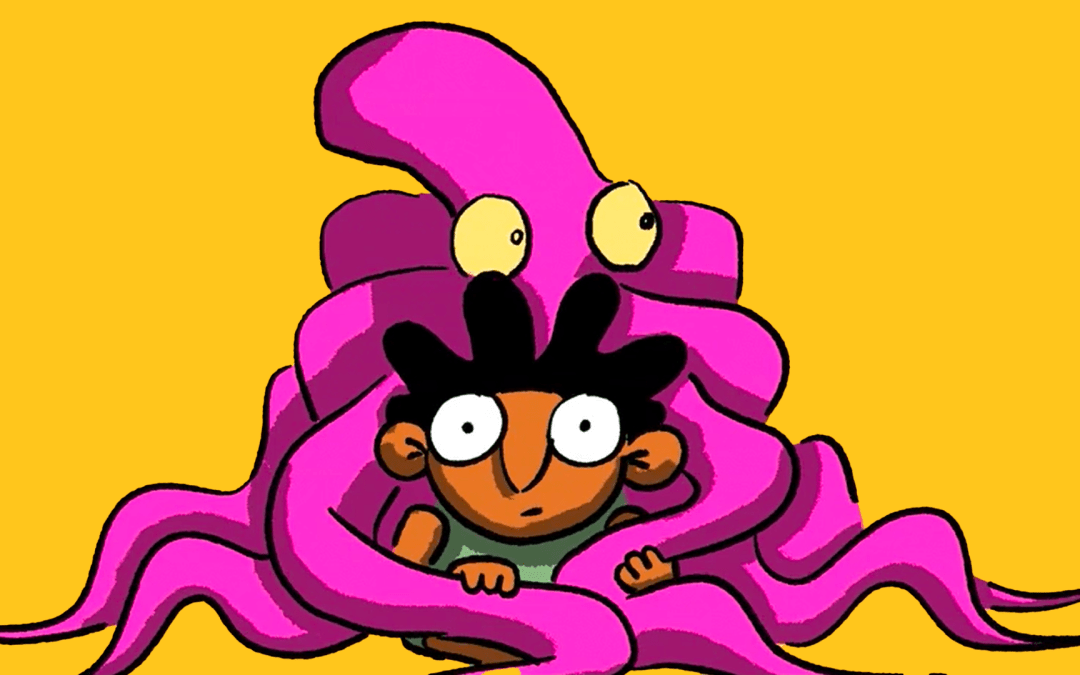
Anxiety was presented as something the body does, not something the child is. Visual metaphor carried most of the meaning. In this film, anxiety appeared as a cute pink octopus that became intrusive when it felt under threat.
Children recognised themselves in the character almost immediately. Parents reported that the metaphor gave them a way to talk about anxiety without shame or blame. The octopus created distance, which made reflection possible.
How AI was used
AI-supported tools were used to assist with concept development, character design, and animation workflow.
This allowed visual ideas to be tested quickly and adjusted without long production delays. Importantly, AI did not make decisions about meaning, tone, or safety. Those remained human-led and clinically reviewed throughout.
Access and reach
Using AI reduced the cost and time involved in producing the animation.
That made it possible to share the film freely. I chose to publish it on my website and Instagram rather than restrict it to formal settings. Families, educators, and clinicians could access it without barriers.
Since release, the animation has been viewed and shared more than 200,000 times. This response reflects a wider need for clear, trustworthy explanations of childhood anxiety.
What changed for viewers
Children reported feeling less frightened by their physical sensations once they understood what anxiety was doing.
Parents described having more patient conversations at home. Educators and clinicians valued the film as a shared reference point that did not require specialist knowledge.
From a production perspective, the project showed that AI-supported animation can be used to create clinically responsible mental health education at scale.
A final reflection
When anxiety is treated as something to eliminate, children learn to fear their own bodies.
When it is explained, the relationship changes. This project explored whether a short, carefully governed animation could support that shift. For many families, it became a first step towards understanding rather than control.
Applying this approach
This model works well for childhood anxiety, emotional regulation, school-based mental health education, and professional training.
When AI-supported production is led by clinical insight and ethical restraint, it can widen access to mental health education without lowering standards. That principle guided this work from start to finish.
by Quint Boa, AI Video Executive & Producer
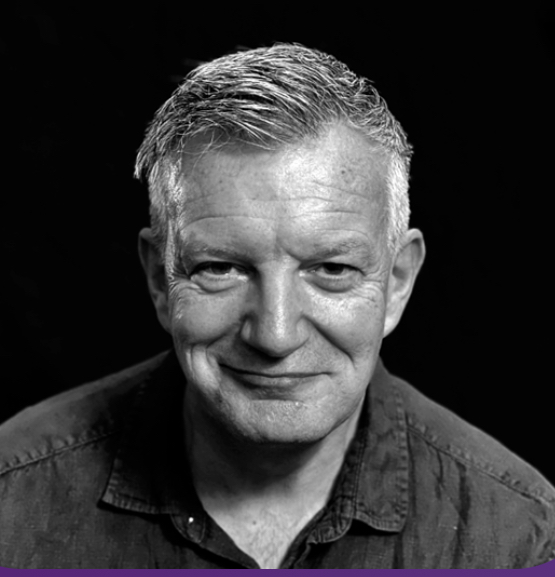
Quint is an Executive Producer specialising in AI video production for the healthcare sector. Quint has worked for over 40 years in the film, radio, and television industries. Twenty-five years ago, he founded Synima, a global video production company. Quint has embraced artificial intelligence in the creative process. Working with trusted colleagues, he’s developed a hybrid approach to AI within video production that expedites workflows and reduces costs. Quint believes ‘your health is your wealth’ and is enthiastic about every aspect of healthcare. As a UKCP-qualified psychologist, Quint feels uniquely equipped to support the communication challenges the healthcare faces by combining his experience with AI video production techniques, psychological insight and practical solutions.