
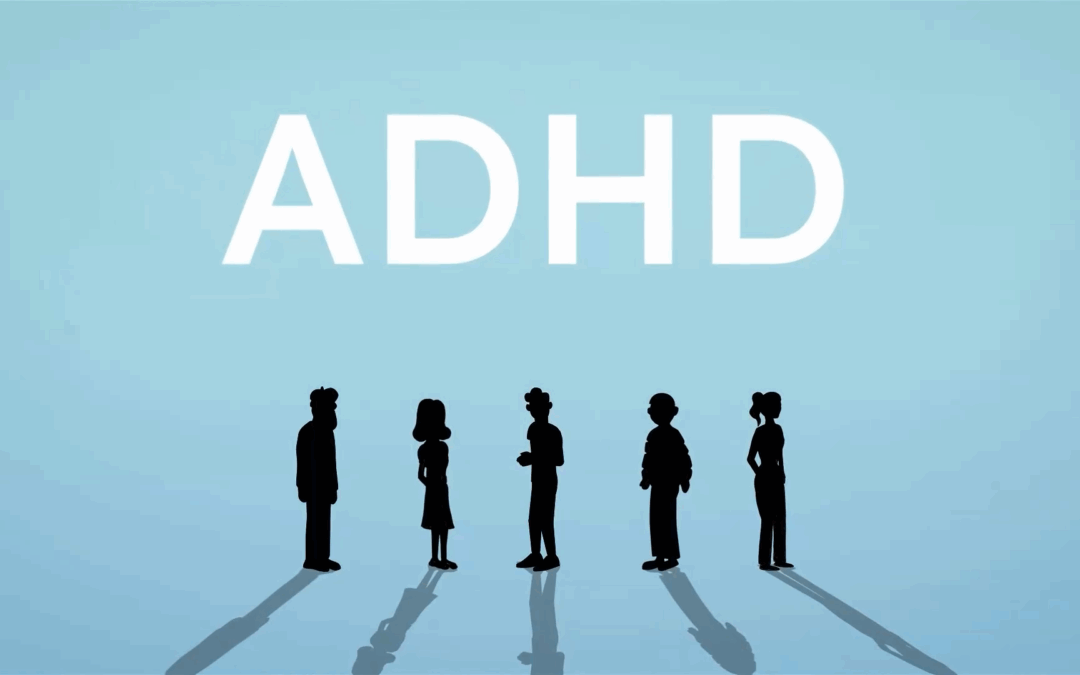
ADHD Patient Education Case Study
Helping people make sense of ADHD before assessment
How this project began
This one came directly out of what I was seeing in real clinical settings. People weren’t arriving for ADHD assessment neutral or curious. They were arriving exhausted. Most had already spent months trying to work themselves out online. Some were convinced they had ADHD and worried they wouldn’t be taken seriously. Others felt completely unsure what parts of their history even mattered. With NHS waiting lists stretching on, that uncertainty just sat there.
University College London asked if an animation could help steady things before assessment. Not to diagnose anything and not to reassure people they did or didn’t have ADHD. Just to explain what ADHD is, how assessment works, and why it isn’t a quick yes-or-no process. That felt like a practical piece of work to do, so I took it on.
The context it was responding to
What I kept seeing wasn’t simply lack of information. It was people trying to interpret themselves through fragments of information. They would arrive with long mental checklists, or sometimes with the opposite problem – no idea what to say or where to begin. The waiting period before assessment had become quite loaded psychologically. People felt they needed to have already worked themselves out before they even walked into the room.
Clinicians, meanwhile, rarely have the luxury of time. Assessments are structured. GP appointments are short. There isn’t always space to slow down and explain how attention, development, coping strategies, and masking actually get looked at over time. So people often arrive tense, trying to get it “right”.
The question behind the film was simple. Could we give people something steady to hold onto while they were waiting?
What the film needed to do
The animation had to sit clearly before diagnosis. It couldn’t suggest outcomes and it couldn’t turn into a checklist. I avoided listing symptoms completely. Instead, we focused on the kinds of experiences people bring into consultations but struggle to organise. Losing track of tasks halfway through. Overcompensating by over-preparing. Looking capable on the outside but using a huge amount of effort to stay on top of things. Those were the moments that tended to create the most confusion ahead of assessment.
It also needed to explain why proper assessment takes time. Developmental history matters. Context matters. Patterns across a lifespan matter. If people understood that before arriving, they tended to relax slightly. That alone changes the tone of an assessment.
The aim was simple. Help people arrive clearer and less wound up.
Why animation was used
A lot of what people describe around attention and regulation is internal. It’s hard to film that without turning it into performance. I didn’t want actors portraying “ADHD behaviour” on screen. That can quickly become reductive. Animation gave us a way to show effort, distraction, and overload without tying it to a single person or stereotype.
It also kept the film open. No one viewer had to see themselves as the example. They could recognise parts of their own experience without being told what that meant.
We kept the visuals simple and metaphorical. Nothing heavy-handed. Just enough to make internal states visible.
My role in shaping it
I executive produced the film and stayed close to the psychological framing all the way through. My clinical work meant I had a clear sense of where people tend to get stuck before assessment and what actually helps. That fed directly into decisions about pacing, wording, and structure.
One thing I was careful about was removing anything that sounded like criteria. The moment people feel they have to prove something, anxiety spikes. So the film explains process rather than traits. It slows things down rather than pushing viewers toward a conclusion.
We kept the narration plain and steady. No dramatic delivery. Nothing overly polished. It needed to feel like something that sat alongside clinical work rather than trying to replace it.
Writing and clinical grounding
The script was developed alongside academic input so it stayed aligned with current understanding of ADHD across childhood and adulthood. My job was translating that into language people could actually hear without flattening it into a list. Every version was checked to make sure it explained without drifting into advice or diagnosis.
The boundary stayed clear throughout. The film reflects and explains. It doesn’t label.
Production process
We used digital tools to test visual ideas and pacing quickly, mainly so we could refine the tone without dragging the production out. That helped on a practical level. But all decisions about meaning and framing stayed human. Nothing about the patient experience was generated or automated. It was shaped through discussion and revision like any other serious piece of work.
How the film travelled
The first version was created for an academic keynote looking at undiagnosed ADHD within the UK prison population. After that, it became obvious the piece could work in other settings. With permission, I re-edited it for NHS clinics, GP consultations, universities, and general public use. A generic version also went out freely through my own channels.
That felt important. Many people are sitting in long waiting periods trying to understand themselves with very little to hold onto. The film gave them something measured and neutral during that time.
Since release it has been viewed and shared more than 200,000 times across different platforms and settings.
What shifted for viewers
Clinicians began feeding back that conversations with patients were starting from a calmer place. People arrived less focused on proving they had ADHD and more able to talk through their history properly. Families said it helped them understand the process without jumping to conclusions.
Most importantly, viewers recognised parts of themselves without feeling pushed toward a label. That was always the intention.
Final reflection
The film was never about telling anyone whether they had ADHD. It was about making the space before assessment feel less confusing and less pressured. When people arrive with a bit more clarity and a bit less urgency, the clinical work tends to go better. That was the whole point of making it.
by Quint Boa, AI Video Executive & Producer
Quint is an Executive Producer specialising in AI video production for the healthcare sector. Quint has worked for over 40 years in the film, radio, and television industries. Twenty-five years ago, he founded Synima, a global video production company. Quint has embraced artificial intelligence in the creative process. Working with trusted colleagues, he’s developed a hybrid approach to AI within video production that expedites workflows and reduces costs. Quint believes ‘your health is your wealth’ and is enthiastic about every aspect of healthcare. As a UKCP-qualified psychologist, Quint feels uniquely equipped to support the communication challenges the healthcare faces by combining his experience with AI video production techniques, psychological insight and practical solutions.